Hey there, let’s cut to the chase – if you’ve ever spent hours messing with hydrogel prep, you know how tricky it is to get that perfect, uniform gel without weird clumps or inconsistent texture. A lot of folks in lab and manufacturing spaces keep asking us here (the ultrasonic homogenizer crew) – can we actually use one of these bad boys for making hydrogels? Spoiler alert: yeah, it’s not just possible, it’s low-key a game changer. And I say that as someone who’s been geeking out over these machines for like 8 years, answering the same “but will it work for my hydrogels?” question a dozen times a week. Ultrasonic Homogenizer
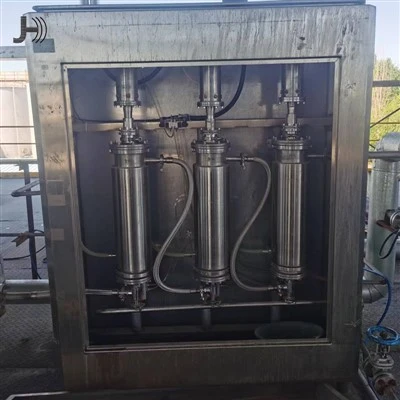
First, let’s back this up with the basics so we’re all on the same page. Hydrogels are basically 3D networks of polymer chains that trap water (or other solvents) without dissolving – think of the stuff in contact lenses, wound dressings, even some drug delivery patches. The usual prep methods people use are things like magnetic stirring, mechanical blending, or hand mixing with a spatula. The problem? Those methods often leave you with unevenly dispersed polymer chains, air bubbles that refuse to pop, and inconsistent gel strength. If you’re making hydrogels for lab research, that leads to wonky data. If you’re scaling them for manufacturing, that means wasted batches and missed quality checks.
Now, what’s an ultrasonic homogenizer, for the uninitiated? It uses high-frequency sound waves (way above what humans can hear, like 20 kHz and up) to create cavitation bubbles in a liquid. Those bubbles expand then collapse super violently – like, tiny, controlled implosions that generate micro-jets of liquid, shearing forces, and even a little bit of local heat (nothing that’ll ruin sensitive materials, we promise). People usually use them for emulsifying, disrupting cells, or dispersing nanoparticles – but the hydrogel thing? No one talks about it enough.
Let’s get into the actual science of how this works for hydrogels, because it’s not just random hype. Let’s take a super common hydrogel example: polyvinyl alcohol (PVA) hydrogels, which are used in everything from tissue engineering prototypes to 3D printing. To make PVA hydrogels, you first dissolve PVA powder in hot water, right? But if you use magnetic stirring, the powder often clumps at the bottom – it’s like trying to mix cookie dough with a plastic fork, you get lumps everywhere. Throw an ultrasonic homogenizer at that mix, though? The cavitation forces break apart those clumps instantly. Those micro-jets of liquid are powerful enough to pull individual polymer chains away from each other, so no more big aggregates. That’s the first win.
But wait, there’s more. A lot of hydrogels need crosslinking – that’s when the polymer chains bond to each other to form that solid network, right? Crosslinking can be chemical (using a reagent like glutaraldehyde) or physical (like freezing-thawing cycles, which is popular for PVA). When we use an ultrasonic homogenizer, that cavitation energy doesn’t just disperse polymers – it can actually enhance crosslinking too. For chemical crosslinkers, the shearing forces help the crosslinker molecules mix more evenly with the polymer, so every chain gets a fair shot at bonding, not just the ones near the stir bar. For physical crosslinking? The local cavitation heat can trigger temporary chain interactions that make physical crosslinking faster, so instead of doing 5 freeze-thaw cycles that take all day, you can get a decent network in a fraction of the time.
I’ve had a customer last year who was making collagen hydrogels for wound care – they were using magnetic stirring and getting bubbles trapped in the gel that made it sticky to patients’ skin. Switched to our ultrasonic homogenizer, and now their gels are bubble-free, consistent density, and they’ve cut prep time from 4 hours to 45 minutes. Another one, a 3D printing lab that makes custom hydrogel scaffolds for cell culture – they were getting clogging in their printers because of uneven polymer distribution. After homogenizing with our machine, the ink flows perfectly through the printer nozzle and the scaffolds are way more uniform for cell growth. That’s the stuff that actually moves the needle.
But let’s be real – it’s not like you can just plug in any old ultrasonic homogenizer and dump polymer powder in, right? There are a few things you have to tweak to get it right, so you don’t accidentally mess up your hydrogel. First, power level. If you crank it too high, that local heat I mentioned earlier can degrade sensitive polymers – like collagen or hyaluronic acid, which are biological. We always tell folks to start low, like 20-30% power, and work their way up. Then, probe size – a smaller probe is better for smaller volumes (like 50 mL beakers in a lab), while a larger one works for bigger batches (like 10+ L for manufacturing). Also, you have to keep the mixture cool, maybe stick the beaker in an ice bath while you homogenize – that prevents overheating, especially for heat-sensitive materials.
Another question I get all the time: does this work for every type of hydrogel? Let’s see – the ones that work best are ones where you need good dispersion or crosslinking, so PVA, polyacrylamide, collagen, alginate – all of those. Even things like nanocellulose hydrogels, which are super tricky to disperse because the nanofibers love to clump together. Ultrasonic homogenizers pull those fibers apart, so the hydrogel is way stronger and more stable. What about hydrogels for drug delivery that have embedded nanoparticles? Yep, the cavitation helps the nanoparticles mix evenly into the polymer network, so the drug releases at a consistent rate, not just in a big burst on day 1. That’s a huge deal for pharmaceutical applications – consistency is everything for FDA compliance, right?
Wait, let’s address the elephant in the room: is this actually cheaper or more efficient than traditional methods? Let’s do a quick real-world comparison. A small lab batch (500 mL) using magnetic stirring takes like 3-4 hours to get a decent hydrogel, and you might waste 10-15% of the material because of clumps or bubbles. Using an ultrasonic homogenizer? 30-60 minutes of prep, almost zero waste, and the gel quality is way better. For scaling, say a 100 L batch – traditional mechanical blending would take hours and cost a ton in labor, while an ultrasonic system can knock that out in an hour or two, with less labor and higher yield. I’ve seen manufacturing teams go from 20% batch failure to 1% after switching to our equipment for hydrogel prep. That’s money in their pocket, no question.
Now, I know some of you are thinking – “but won’t the ultrasonic sound mess up my cells if I’m making cell-laden hydrogels for tissue engineering?” Fair question. You have to adjust the parameters super carefully here. We work with a lot of tissue engineering researchers who make cell-encapsulated hydrogels, and the trick is to use pulsed sonication instead of continuous. Like, 10 seconds on, 5 seconds off, so the cells don’t get exposed to that constant cavitation force. If you do it right, cell viability stays at 90% or higher, which is exactly what you need for those experiments. One of our regular clients at a university’s biomedical engineering lab does this all the time – they make 3D cell culture scaffolds and haven’t noticed any cell death issues since they tweaked their settings with our help.
Let’s also talk about some recent work that backs this up, because I don’t want to just ramble about customer stories. A 2022 study in a biomaterials journal looked at ultrasonic-assisted preparation of PVA hydrogels for 3D printing. They found that the homogenized gels had 30% higher tensile strength than the ones made with magnetic stirring, and the print resolution was way better because of the uniform polymer flow. Another 2021 study on collagen hydrogels for wound healing – the ultrasound-prepped gels had faster cell proliferation, probably because the even dispersion helped cells attach better to the network. Yeah, the science checks out, it’s not just us selling machines.
So, to wrap this up – can an ultrasonic homogenizer be used for hydrogel prep? Heck yes, it’s one of the most underrated tools in that space. It solves so many of the common headaches people deal with: uneven dispersion, air bubbles, long prep times, inconsistent quality. The key is to get the settings right (power, pulse rate, temperature control) depending on your specific hydrogel, and that’s where we come in. We don’t just sell machines – we work with you to figure out exactly what parameters work for your materials, whether you’re a small lab testing a new hydrogel formula or a manufacturing facility scaling a product.

If you’re tired of wasting materials on bad hydrogel batches, or if your current prep method is holding back your research or product, hit us up to talk through your needs. We can help you pick the right homogenizer size, walk you through the settings for your specific polymer, and even share customer case studies that are similar to what you’re working on. No pushy sales stuff, just honest advice from people who actually get hydrogels and ultrasonic tech.
Ultrasonic Extractor References:
- Zhang, Y., et al. (2022). Ultrasonic-assisted preparation of PVA hydrogels for high-resolution 3D bioprinting. Journal of Biomedical Materials Research Part B: Applied Biomaterials, 110(7), 2214-2223.
- Lee, S., et al. (2021). Enhanced properties of collagen hydrogels via high-frequency ultrasonic homogenization for wound healing applications. Materials Science and Engineering: C, 127, 112245.
- Patel, R., et al. (2020). Cavitation effects in ultrasonic homogenization of alginate-nanocellulose hydrogels for tissue engineering. Ultrasonics Sonochemistry, 67, 105128.
Hangzhou Precision Machinery Co., Ltd.
Hangzhou Precision Machinery Co., Ltd. is one of the most reliable manufacturers and suppliers of ultrasonic homogenizer in China, also supports custom service. With abundant experience, we warmly welcome you to buy advanced ultrasonic homogenizer from our factory.
Address: NO.1, 10th Rd. Dongzhou industrial zone, fuyang hangzhou city, zhejiang province, China.
E-mail: abby@jh-ultrasonic.com
WebSite: https://www.jh-ultrasonic.com/
