As a Special Socket supplier, I get this question at least three times a week: Can a Special Socket be used in a refrigeration unit? It’s not a simple yes or no—refrigeration is a specialized industry, and sockets that work for a lamp or a power tool often fall short when it comes to heavy-duty, temperature-sensitive cooling equipment. Let’s break this down with real-world context from my side of the business, because I’ve seen both the wins where a custom Special Socket made a system run smoother, and the misses where a generic choice caused costly downtime for refrigeration techs. Special Socket
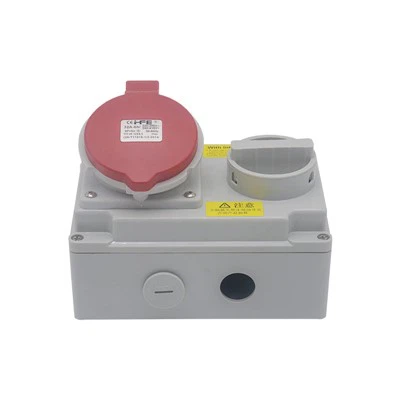
First, let’s talk about why refrigeration units are different from other appliances. Unlike a fridge in your kitchen, commercial refrigeration units—think walk-in coolers for grocery stores, industrial chillers for food processing plants, or transport refrigeration trucks—run 24/7, often in extreme environments. That means they draw consistent, heavy electrical loads, and their sockets have to withstand not just vibration (from truck rides or conveyor belt movement) but also temperature swings. A walk-in cooler can drop to -20°F, while the compressor compartment can reach 120°F, so any socket connected there can’t warp, crack, or lose connection when those temps shift. Generic sockets, the ones you pick up at a hardware store, are built for indoor room temp and occasional use—they can’t handle that stress.
My job as a Special Socket supplier is to make products tailored to these exact pain points, and I’ve seen first-hand how a purpose-built Special Socket changes things. Let’s take a recent example: a regional food distribution company was having issues with their transport refrigeration units. Their old sockets kept corroding after six months on delivery routes, especially since the units sometimes got splashed with cold, salty road spray. The technicians were spending hours replacing sockets mid-week, which delayed deliveries and cost the company thousands in lost revenue. We supplied them with a custom Special Socket that’s sealed with an IP67 rating—meaning it’s dust-tight and can be submerged in up to a meter of water for 30 minutes. It’s also made with nickel-plated brass, which resists corrosion from salt and moisture. Since installing those sockets, they haven’t had a single socket-related failure in 18 months. That’s the kind of impact a Special Socket can have in refrigeration, where reliability isn’t a nice-to-have—it’s critical.
But wait, it’s not just about sealing. Refrigeration units have specific voltage and amperage requirements, too. A small residential mini-fridge runs on 120V, 15A, but a commercial chiller might need 480V, 60A. Generic sockets are only rated for a narrow range of loads, so using them in a high-demand refrigeration unit can lead to overheating. I once worked with a warehouse that tried using a standard 15A socket for their new cold storage freezer compressor. The socket’s contacts weren’t thick enough to handle the 20A draw, so it started to melt after three months. The compressor overheated, shut down, and the warehouse lost 500 cases of perishable goods. A Special Socket, on the other hand, can be engineered with thicker contact plates and a higher amperage rating matched exactly to the refrigeration unit’s specs. That’s not “over-engineering”—that’s matching the socket to the unit’s needs, which is what separates a Special Socket from a generic one.
Another factor is vibration. Transport refrigeration units, in particular, bounce constantly on highways, and loose socket connections are a common issue. A loose connection causes arcing, which can damage the compressor’s motor over time. We’ve designed our Special Sockets with locking mechanisms that screw tight instead of just plugging in, so even after thousands of miles of vibration, the connection stays secure. One of my clients runs a fleet of 20 refrigerated delivery trucks, and they switched to our locking Special Sockets last year. They reported a 70% drop in motor repair costs, because the compressor’s electrical connections were no longer coming loose. That’s a direct result of choosing a socket built for the unique stresses of refrigeration, not a one-size-fits-all part.
Now, I know some refrigeration technicians might think: “Why not just use a heavy-duty standard socket?” The truth is, there’s no such thing as a heavy-duty standard. Even the best industrial sockets are made for general industrial use, not the specific temperature and load profiles of refrigeration. Let’s test this with a quick comparison: a standard heavy-duty socket has a temperature rating of -4°F to 140°F, which is too narrow for walk-in coolers that go lower. A Special Socket can be rated for -40°F to 185°F, which covers every extreme a refrigeration unit will face. That small difference in temperature rating is the line between a socket that lasts two years and one that lasts five.
But here’s the caveat: not all Special Sockets work for every refrigeration unit. It’s not a “one size fits all” product. That’s why as a supplier, I don’t just sell a socket and walk away. I work with refrigeration engineers to assess their specific unit: is it commercial, industrial, or transport? What’s its voltage and amperage? What environment is it in—cold storage, outdoor, high-humidity? Once we have those details, we customize the socket’s material, sealing, and rating to match. For example, a refrigeration unit in a coastal seafood processing plant needs a socket with extra corrosion resistance, while a unit in a dry, cold storage warehouse just needs a solid, vibration-proof connection. A Special Socket is only useful if it’s tailored to the unit, so generic “special” products won’t cut it.
I’ve also run into technicians who worry that a Special Socket will be more expensive than a standard one. Let’s do the math: a standard heavy-duty socket costs around $10, and lasts 6 months. A Special Socket costs $30, but lasts 5 years. Over five years, that’s $10 for 10 sockets, versus $30 for 1 Special Socket. The savings add up, and that’s before you factor in downtime. When a refrigeration unit goes down, you’re not just paying for a new socket—you’re paying for lost product, labor to repair it, and missed deliveries. I’ve seen a single refrigeration shutdown cost a small business $10,000 in a single day. Investing in a reliable Special Socket is a fraction of that cost, and it eliminates that risk.
Still, let’s be clear: there are cases where a Special Socket isn’t necessary. If you’re replacing a socket in a small residential fridge or a home workshop freezer, a standard heavy-duty socket will work. But for any refrigeration unit that runs 24/7, operates in extreme temperatures, or is in a commercial/industrial setting, a Special Socket is the smarter choice. I’ve had clients try to save money by using standard sockets on their walk-in coolers, and every single one came back within a year asking for our Special Sockets because of repeated failures. That’s not a sales pitch—it’s real feedback from people who deal with refrigeration downtime every day.
So, to circle back to the original question: Can a Special Socket be used in a refrigeration unit? The answer is yes, but only if it’s the right Special Socket for that specific unit. It’s not about picking a random “special” part—it’s about engineering a socket that can handle the unique demands of refrigeration: extreme temperatures, heavy loads, vibration, and moisture. As a supplier, that’s what I specialize in, and that’s why so many refrigeration businesses trust our products.

If you’re dealing with socket issues in your refrigeration units, or you’re planning an upgrade to reduce downtime, I’d be happy to walk through your needs and suggest a tailored Special Socket solution. Don’t wait for a costly shutdown to replace your parts—reach out today to discuss your refrigeration unit requirements and find the right socket for your operations.
Industrial Plug and Socket References
- Industrial Refrigeration Association. (2022). Best Practices for Electrical Components in Commercial Cold Storage.
- National Electrical Manufacturers Association. (2021). Electrical Socket Ratings for Extreme Temperature Environments.
- Transportation Refrigeration Operators Association. (2023). Vibration-Resistant Electrical Components for Delivery Fleet Units.
- International Association of Refrigeration Technicians. (2022). Common Electrical Failure Points in Commercial Refrigeration Systems.
Zhejiang Hefeng Electric Co., Ltd.
Address: Wenzhou Daqiao Industrail Park, Beibaixiang Town, Yueqing City, Zhejiang Province, China
E-mail: hefengplug@chinahfe.com
WebSite: https://www.hfcee.com/
