Hey folks, if you’re running a Daf truck—whether it’s a day cab hauler for local drops or a semi pulling cross-country loads—you know that thing’s backbone isn’t the engine or the cabin. It’s those leaf springs under the frame, right? As a supplier who’s been making Daf-specific leaf springs for over a decade, I see way too many owners and mechanics rushing through maintenance on these parts, or skipping it entirely, and winding up with broken springs, a bumpy ride, or worse: a trailer that won’t stop leaning. Today I’m walking you through exactly how to maintain your Daf leaf springs like a pro—no fancy tools needed, no overcomplicating it, and all the stuff that actually keeps your truck on the road and avoids costly downtime. Let’s get into it. Leaf Spring for Daf
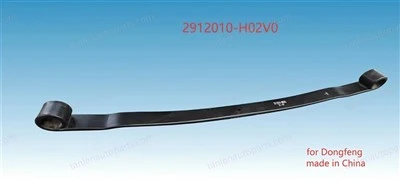
First, let’s cut to what makes Daf leaf springs different from, say, springs for a Ford or a Mercedes. Daf uses medium-duty and heavy-duty trucks for everything from construction to logistics, and their leaf springs are designed specifically to handle that constant stop-and-go, heavy payloads, and the rough European (and global) roads you’re probably rolling on. They’re usually multiple leaves stacked together—called a “pack”—held by a center bolt, U-bolts, and mounted to the frame with bushings. Skimp on maintenance here, and that pack will shift, crack, or snap way before it should. I’ve seen it: a guy who skipped a yearly check showed up with 3 broken leaves on the rear spring and a load of produce that got damaged because his trailer was leaning 2 inches to the side. Don’t be that guy.
Let’s start with the regular checks—these are the things you can do every 10,000 km or every oil change, no appointment needed. First, visual inspection of the spring pack. Pop under the Daf (chock the wheels first, please, safety first) and look at each leaf for tiny cracks, chips, or rust spots. Wait, not just surface rust—surface is fine, but if you see rust that’s pitted, or a crack that looks like it’s growing from the center bolt hole or the end of a leaf, that’s a red flag. Daf springs are made from high-tensile steel, but constant vibration and overloading will eat at those weak spots. Also, check if any leaves are shifting out of the pack—if there’s a gap between two leaves that’s more than a couple of mm, that means the center bolt’s loose and the pack isn’t working right. I once saw a center bolt fall completely out on a Daf CF, and the leaves were all scattered under the frame—total disaster, and the driver almost crashed when the rear end went light.
Next up, the U-bolts. These bad boys clamp the spring pack to the axle, so if they’re loose, the axle can shift, the pack can bounce, and you’re looking at uneven tire wear or worse. How tight should they be? Daf’s spec is usually around 180-200 Nm, but don’t just guess—use a torque wrench. A lot of mechanics over-tighten U-bolts, too, which can crack the spring leaves right at the U-bolt holes. Balance is key here: tighten them in a crisscross pattern, too—if you do one front, then the opposite back, you keep the spring pack evenly pressed and avoid warping it. I’ve had more than one customer come to me with warped Daf springs because a mechanic tightened all four U-bolts at once on one side, and that’s a replacement job right there that could’ve been avoided.
Then there’s the bushings at the ends of the springs—called eye bushings, since they’re the round openings at each end of the spring that mount to the frame or hanger. These take all the flex and movement from the truck going over bumps, and they wear out faster than most people think. If you grab the spring eye and wiggle it back and forth, and there’s more than a little play (like you can move it an inch or more), the bushing is shot. Worn bushings make the ride way bumpier, mess with alignment, and can cause the spring to twist when you turn or brake. Daf uses rubber bushings on most newer models and bronze or nylon on older ones, and replacing these is way cheaper than replacing the whole spring pack. I tell all my customers to swap bushings every 50,000 km, even if they don’t feel play yet—they wear gradually, so by the time you feel it, they’ve already damaged the spring’s eye area.
Now, the stuff that people forget: lubrication. Leaf springs need to move, right? When you go over a bump, the leaves slide against each other to absorb shock. If they’re dry, they squeal, and they wear out fast—like, half the lifespan fast. Wait, not just any lubricant, though—you can’t use regular grease here, it gets dirty and gunked up. I recommend a dry graphite lubricant or a silicone-based spray made specifically for leaf springs, because it stays slick without attracting road grime. How often? Every 20,000 km, or if you hear that high-pitched squeal when you go over a speed bump or a pothole. To do it right, take the time to separate each leaf gently (don’t force them, if they’re stuck, hit the side of the spring with a rubber mallet to loosen them) and spray a light coat between every layer. Wipe off excess so it doesn’t get all over your tires or frame—excess grease will attract dirt and cause rust, which defeats the whole purpose. A quick note: don’t lubricate the center bolt or the U-bolts—they need to stay dry to keep the pack tight.
Wait, what about overloading? I know, I know, sometimes you have to carry that extra pallet or the trailer’s a bit heavier than rated. But Daf leaf springs are rated for a specific payload, and running 10% over every trip cuts their lifespan by almost half. I had a customer a while back who was running a Daf XF with 20% over max payload for 2 years straight, and his springs were breaking every 6 months. Once he dialed back the load to spec, his springs lasted 3 years, easy. If you’re regularly running close to the max, maybe talk to a supplier like me about upgraded Daf-specific leaf springs—we make heavy-duty packs that handle extra load without sacrificing ride quality, no need to modify the frame or anything.
Then there’s alignment checks. If your leaf springs are out of whack, your truck will pull to one side, tire wear will be uneven, and you’ll put extra stress on the whole suspension. A good alignment shop will check the spring setting along with the toe and camber—most people don’t know that. For Daf trucks, the spring’s center alignment should be within 2mm of the axle center line, and if it’s off, that means either the U-bolts are loose or the spring pack is warped. Get that fixed fast, because if you ignore it, you’ll wear out tires 2x faster and eventually break the spring’s eye.
Now, let’s talk about when you shouldn’t just maintain, but replace. Cracks longer than 5mm, rust that’s eaten through more than 10% of a leaf, leaves that are bent permanently (you can see a curve that doesn’t straighten when you lift the axle)—those are replacement jobs, not fixes. I always tell people not to wait for a spring to break mid-load to replace it. It’s way safer, and way cheaper, to swap it during a scheduled service. Also, always replace both springs on an axle at the same time—if you replace one and leave the other, the new spring is stiffer, so the truck will lean to one side, mess with alignment, and put extra stress on the new spring. It’s a small cost that saves you a big headache later.
Wait, common mistakes I see all the time: people using aftermarket springs that aren’t made for Daf. I’ve had guys come to me with a cheap spring from a random parts store that fits the eye, but the center hole is off, or the leaf thickness is wrong, so it’s too stiff or too soft. Daf’s leaf springs are engineered to match the frame’s flex, the axle weight, and the truck’s brake system, so using the right part is non-negotiable. As a Daf leaf spring supplier, I source all my steel from the same mills Daf uses, so every spring we make is a direct OEM replacement, no cutting corners.
Another mistake: skipping the annual deep clean. Salt in winter, mud, road tar—all that gunk builds up on the springs and causes rust, which weakens the steel. Every winter, take an hour to spray the springs down with a pressure washer (keep the pressure low, don’t blast the bushings or seals) to get all that grime off. Then spray a light coat of lubricant to keep them moving. I do this on my personal Daf truck, and my springs are still going strong after 400,000 km.
Let me wrap this up real quick, because I don’t want to bore you. The key to keeping your Daf leaf springs running right is: regular visual checks every oil change, tightening U-bolts to spec (crisscross pattern!), replacing worn bushings before they damage the springs, lubricating between leaves every 20k km, not overloading, and fixing alignment issues fast. And if you ever need a replacement spring, don’t go for the cheap knockoffs—get a supplier that specializes in Daf parts, like us, so you know it’s built to last.

If you have questions about your specific Daf model (CF, XF, LF, whatever you’re driving) or need to swap out old springs, hit us up to chat about your needs. We’re here to help you keep your truck on the road, no downtime, no surprises.
Bushing References: 1. Daf Trucks Official Maintenance Manual for Medium and Heavy-Duty Models, 2022 Edition. 2. Automotive Suspension Engineering: Leaf Spring Design and Maintenance, SAE International, 2019. 3. Commercial Vehicle Safety Alliance (CVSA) Brake and Suspension Inspection Guidelines, 2023. 4. Supplier Best Practices for OEM-Equivalent Leaf Springs, Aftermarket Automotive Parts Association, 2021.
Henan Talen Auto Parts Co., Ltd.
As one of the most professional leaf spring for daf manufacturers and suppliers in China, we have world-leading production equipment and strong manufacturing capabilities. Please feel free to buy durable leaf spring for daf made in China here from our factory. For price consultation, contact us.
Address: 7th Floor, Block C, No.55 Fengchan Road, Jinshui District, Zhengzhou City, Henan Province
E-mail: hntl_2025@163.com
WebSite: https://www.talen-autoparts.com/
