Hey there, fellow road trippers, daily commuters, and everyone in between! Let’s cut to the chase—if you own an electric car (EV), you’ve definitely stared at your charging screen at some point, thinking, “Is this going to take longer than my coffee run?” or “Why does it take 2 hours here but 20 minutes there?” As a car charger supplier, I get asked this question at least 10 times a week: does a charger’s power output actually make a big difference in how fast my EV charges? Short answer: hell yeah, it does—but there’s way more to it than just grabbing the highest-wattage charger you see. Let’s break this down like we’re chatting over a beer after a long drive, no boring engineering jargon (okay, a little, but I’ll keep it simple). Car Charger

First, let’s get one basic term out of the way: power output is measured in watts (W), right? Most regular wall plugs are like 1.5kW for home use, and public chargers range from 7kW (slow) all the way up to 350kW (fast AF). But here’s the thing that surprises most people: it’s not just the charger’s wattage alone that decides charging time. Your EV’s battery has a maximum input power it can handle—think of it like how much water a straw can let through vs. a garden hose. If your charger is a garden hose (350kW) but your car’s only got a straw inlet (say, max 150kW), that high-power charger is just wasting potential—you won’t charge any faster than a 150kW charger. That’s a super common mistake I see drivers make: they’ll pull up to a 350kW charger thinking they’ll be out in 10 minutes, only to be confused when it’s still taking the same time as a 150kW one.
Let’s use a real example, something I’ve seen firsthand with our chargers and customer EVs. Take a Tesla Model 3 Long Range, which has a max input of around 170kW. If you plug into our 50kW Level 2 home charger (that’s what most people use at their house), it’ll add about 25 miles of range per hour of charging. So if you’re at 10% battery, 0 to 100% would take like 12 hours—perfect for overnight, right? But if you take that same Model 3 to a public 150kW DC fast charger (DC is the quick kind, vs. AC for home), you’re looking at adding ~100 miles of range in 15 minutes. At our top-tier 250kW DC fast charger? Even with the car’s max 170kW limit, that same 15 minutes adds ~110 miles—so a little faster, but not double like the wattage makes it sound. That’s because the car can only take so much power at once. If the charger was 350kW, it’d still max out at 170kW, so you’d get almost the same speed as the 250kW one. Crazy, right?
Now, let’s talk about the elephant in the room: battery temperature. This is a huge one that most people (even some not-so-experienced charger folks) sleep on. Lithium-ion batteries—what all EVs use—are like that friend who’s either too hot or too cold to function. If it’s freezing outside (we’re talking below 32°F/0°C), the battery’s internal resistance goes way up, so it can’t take as much power. I’ve had customers message us panicking, saying their 150kW charger was only pumping out 50kW when it was 20°F out—and yeah, that’s normal. The car’s battery management system (BMS) is actually throttling the charger’s power to protect the battery. It’s like when your phone dies at 2% and goes into “low power mode” to slow down charging—same idea, just scaled for a big car battery. On the flip side, if you’re charging in 100°F/38°C heat, the BMS will also cap the power to keep the battery from overheating. So even if you’ve got a 350kW charger, if the battery’s too cold or too hot, you’re not gonna see full power. That’s why fast charging in winter or extreme summer is slower than the advertised numbers—another myth busted right here.
Wait, let’s not forget the “charging curve.” This is the part where charging time isn’t linear, which trips up so many people. The first part of charging (like 0% to 80% battery) is when the charger can pump as much power as the car and battery allow—so that’s the quick part. But once you hit 80%, the BMS starts to lower the power to protect the battery from getting full too fast, which can cause degradation. So that last 20% (from 80 to 100%) takes way longer than the first 80%. Let’s go back to that Model 3 example: from 0 to 80% on a 150kW charger, that’s ~20 minutes, adding ~250 miles of range. But from 80 to 100%? That’s another 30 minutes, adding only ~50 miles. So even if you had a 350kW charger, that 80 to 100% window would still take around 25 minutes, because the battery is limiting the power. That’s why I always tell customers: don’t wait till 10% to charge, and don’t hang around for “full” unless you actually need every mile—save the 100% for when you’re leaving on a long trip.
Now, as a car charger supplier, I have to be real with you: there’s a lot of junk chargers out there that don’t deliver the wattage they claim. I’ve seen a 100kW charger that only put out 40kW because of cheap components, or a charger that can only hit full power if the battery is exactly at 50%. That’s why when we design our chargers, we test them across all conditions—different battery temps, different EV models, to make sure they’re delivering consistent, advertised power whenever possible. We’ve even had customers switch from a no-name charger to ours and say their charging time dropped by 20% without changing their EV or battery. That’s not magic—that’s good engineering, making sure our chargers can output their rated wattage even when there’s a little voltage drop from the grid, or a long cable run.
Let’s also talk about when higher power is actually worth it. If you’re a fleet operator with 10 delivery vans, you’re gonna want those 350kW chargers, because you need to top up those vans fast between routes—waiting an hour for a slow charger is gonna kill your productivity. If you’re a daily commuter who only needs to charge at home overnight, a 7kW Level 2 charger is totally fine—you don’t need a 50kW one at home, it’s just overkill and way more expensive. But if you do a lot of long road trips, a higher-power DC fast charger (like our 150kW or 250kW ones) is a game-changer, because when you’re on the highway, you don’t wanna stop for an hour every time you need to add 200 miles.
Wait, let’s address another common question: does higher power hurt the battery long-term? I get this all the time, because people hear fast charging is bad. The short answer? No, not if you do it smartly. Newer EVs have way better battery management systems than they did 5 years ago, and quality chargers (like ours) have built-in safety features that adjust power to the battery’s needs. The only time fast charging hurts is if you’re doing it every single day, multiple times a day, all year round—kind of like how drinking a soda once a week isn’t bad, but drinking one every day isn’t great. If you mostly charge at home on slow, then use fast chargers occasionally for road trips, your battery will last just as long as anyone else’s. That’s a big one for me because I don’t want people avoiding fast chargers when they need them, thinking they’ll wreck their battery.
Let’s wrap this up with some quick takeaways that you can actually use, no matter what kind of EV you have:
- The charger’s power output matters, but only if your car’s battery can handle that much power. Don’t pay for a 350kW charger if your EV’s max is 150kW.
- Battery temp is the #1 factor that slashes charging time. Wait a few minutes if you charge in super cold or hot weather, or plan for extra time on long trips in extreme temps.
- The charging curve means that 0-80% is the fast part—stop at 80% unless you need more, it saves you time and is easier on the battery.
- Not all chargers are equal. Cheap chargers might lie about their wattage, so go with a supplier that tests their gear across all conditions (that’s us, by the way).
- Higher power is worth it if you do a lot of long trips or run a fleet—for daily home charging, stick to what works for your schedule.
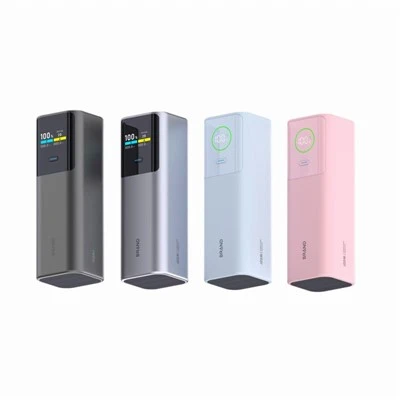
If you’re shopping for a new car charger, whether it’s for home, your business, or your fleet, we’ve got options for every need: Level 2 home chargers for overnight, mid-range DC fast chargers for road trips, and high-power 350kW units for heavy use. We don’t do overhyped numbers or cheap, flaky parts—we build chargers that deliver on their promise, so you never have to stare at that charging screen wondering if it’s working right. To talk through what charger fits your EV, schedule, or business needs, reach out to our team for a no-obligation consultation. We’ll help you skip the guesswork and get a charger that actually saves you time.
Car Vacuum Cleaner References
- Electric Power Research Institute (EPRI). (2022). DC Fast Charging Performance and Battery Health for Light-Duty EVs.
- International Energy Agency (IEA). (2023). Global EV Charging Infrastructure Report: Power Output and Charging Speed Metrics.
- SAE International. (2021). J1772 Combined Charging System (CCS) DC Fast Charging Specifications for Passenger Vehicles.
- US Department of Energy (DOE). (2022). “Understanding EV Charging Speeds and Power Output” – Alternative Fuels Data Center.
- Wang, L., et al. (2023). “Battery Thermal Management Impacts on EV Fast Charging Efficiency and Time”. Journal of Power Sources.
KOMOS Co., Ltd.
As one of the most professional car charger manufacturers and suppliers in China, we are committed to providing high quality custom service and OEM service. Please feel free to wholesale bulk durable car charger at competitive price from our factory. Welcome to contact us for quotation.
Address: 4th Floor, Building 3, Zhongxi Buchong Community, Shajing Street, Bao’an District, Shenzhen City, Guangdong Province, China 518104
E-mail: contact@komos-tech.com
WebSite: https://www.komos-tech.com/
