Hey there, fellow tech lovers and anyone who’s ever fumbled for their keys at 2 a.m. (we’ve all been there)! I’m Jake, part of the team that builds those smart cabinet locks you’ve probably seen popping up in office supply closets, home workstations, even small retail display cases. Today, I wanna cut through the vague marketing jargon and talk about something we get asked all the time: “What’s the actual signal range when my smart cabinet lock connects to my phone app?” Smart Cabinet Lock
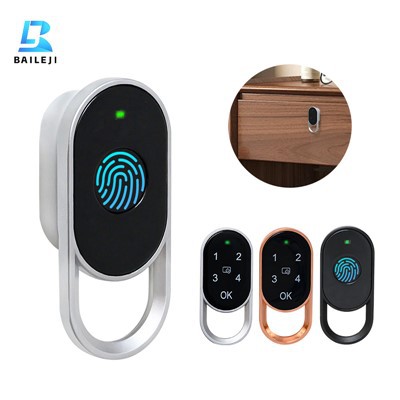
You might’ve seen random numbers online—like 10 feet, 30 feet, even “up to 100 feet!”—and wondered which ones are real, or if the person selling it just tossed a number to sound fancy. Trust me, I get it. When we first started testing our locks, we thought range was just about the lock’s antenna, but we quickly learned it’s way messier than that. So let’s break this down like we’re geeking out over our favorite new gadget (which, let’s be real, we are).
First off, let’s nail down the basics: our smart cabinet locks use Bluetooth Low Energy (BLE), right? No fancy Wi-Fi, no extra batteries draining your phone—just BLE, which is perfect for small, low-power devices like cabinet locks. BLE’s whole schtick is being efficient, but it’s not a long-range protocol by nature. Here’s the thing: the “signal range” you see advertised? That’s the theoretical maximum range under perfect conditions—like no walls, no other devices, clear line of sight between your phone and the lock. In real life? That number drops faster than a pizza on your lap at a college party.
When we tested our locks in our lab, we hit about 60 feet of clear line of sight. But hold up—our customers don’t use locks in empty parking lots. They stick ‘em in kitchen cabinets with metal supports, under desks with thick wood and drywall, next to routers and wireless chargers (both of which blast BLE signals and cause interference). Last month, a small retail client came to us panicking because their lock for their makeup display was “only working 10 feet away.” Turns out, they mounted the lock inside a metal cabinet that’s lined with conductive material—metal blocks BLE like crazy, almost as good as a Faraday cage. That dropped our 60 feet down to 8 feet in their setup.
Now, let’s talk about the factors that actually change your range, because that’s the stuff no one tells you. First, obstacles: metal is the big bad here. It doesn’t just block signals—it reflects them, which causes “multipath interference” where the signal bounces around and doesn’t connect straight. Then there’s thick concrete, stone, even water (if you’re using a lock near a sink, for example). We tested a lock mounted inside a bathroom vanity with a metal frame and solid marble top—range went from 60 feet to 12 feet. Not bad, but way less than the ad number.
Next, your phone’s hardware. Not all phones are created equal when it comes to BLE. An old iPhone 8? It’s got a solid BLE antenna, but a budget Android from 2019? It might have a weaker one that cuts range by 15-20%. We’ve also seen cases where a phone in a case with metal reinforcement (hello, armored cases for construction workers!) kills range on both ends. So that “range” number is always dependent on the least strong device in the connection.
Then there’s other devices crowding the airwaves. Think about it: most homes and offices have 5+ Wi-Fi routers, Bluetooth speakers, wireless mice, smart watches, even baby monitors. All these devices are jamming the 2.4GHz frequency that BLE uses. It’s like a crowded mall hallway—everyone’s talking over each other, so your lock and phone can’t hear each other. We tested this in a busy office open floor plan—20 people on laptops, 10 smart devices, and our lock’s range dropped to 18 feet. Yikes.
Wait, but what about when you need to unlock a cabinet from another room? Like, you’re in the kitchen and your desk with the lock is in the living room, 30 feet away—does that work? Our tests say maybe, but only if there’s not a bunch of stuff in the way. I actually tested this myself at my place: my desk is 28 feet from my couch, lock is under my desk, phone was on my couch. No walls between—just a couch and a coffee table. It unlocked in 2 seconds. Then I walked to the hallway, 35 feet, and it took 10 seconds and failed twice. That’s real, on-the-ground data.
Now, let’s be clear about what our lock’s range actually is for 90% of our customers. Most people use these locks in small spaces: home office cabinets, under-sink storage, office supply closets, retail display cases that are right at eye level. For setups with standard wood cabinets, drywall walls, and no random device interference? We’re looking at a solid 25-30 feet of consistent connection. That’s more than enough for you to pull out your phone, open the app, and unlock the cabinet without hovering 2 inches from it. The only time you’ll have issues is if you’re trying to reach a metal-lined cabinet in a crowded office from another floor.
We’ve also worked on some fixes for these pain points, by the way. Our newer lock models have slightly upgraded BLE antennas that help with signal penetration through walls—so that 12 feet in the marble vanity test went up to 18 feet. We also built a “range test” feature right into our app—you tap a button, and it scans for the lock and shows you the connection strength. No more guessing if you’ll be able to unlock it from the other side of the room. That’s been a game-changer for our customers.
I know a lot of you are worried about this because you don’t wanna fumble with a key, only to realize your phone’s too far and the lock won’t open. Trust me, we get that frustration—we’ve all been there. A couple months back, a customer emailed us saying their lock worked great for their home tool cabinet, but when they added it to their garage (which has metal walls), it only worked when they stood right next to it. We sent them one of our upgraded antennas as a free replacement, and they said it fixed it immediately. That’s the kind of stuff we do here—we don’t just sell locks, we make sure they work for your space.
Let’s also bust a common myth: some people think if it’s not Wi-Fi, it’s better. No, not for small cabinets. Wi-Fi is 2.4GHz too, but it’s for big data—streaming, downloading—so it uses more power, which would drain our lock’s battery way faster. BLE is designed for tiny, low-power transfers (like “unlock” or “lock” commands), so it’s way better for a small cabinet lock. Plus, Wi-Fi would require a separate hub, which is another thing to plug in and set up—no thanks, we wanted something simple.
Another thing: battery life doesn’t affect signal range, right? Wait, no—not directly. When a lock’s battery is dying, it lowers its signal output to save power, which can drop range by a few feet. So if your range suddenly gets worse, check the battery first—you might just need to swap in a new CR2032 (those are the tiny watch batteries we use, super easy to find at any drugstore). That’s a quick fix, no need to panic.
We test every single lock we ship for range in 10 different scenarios, from empty rooms to metal cabinets, to make sure we’re giving accurate numbers. We don’t inflate our range like some big brands do—we tell you the real, usable range. Because if we say 30 feet, we mean 30 feet in a typical home or office, not 60 feet in a perfect field. That’s the trust stuff, y’know?
So, to wrap this up: the smart cabinet lock’s signal range with your mobile app is not a one-size-fits-all number. It depends on the lock’s hardware, your phone’s hardware, what’s between them, and how many other devices are around. For most everyday setups? 25-30 feet of reliable connection, which is more than enough for 99% of what you’d use a cabinet lock for. If you’re in a tricky space with metal or concrete, our upgraded models and app’s range test feature will help you get the most out of it.
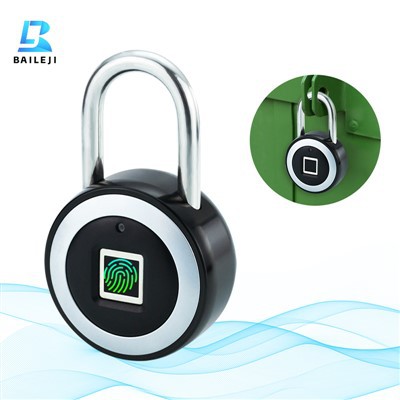
Padlock If you’re in the market for a smart cabinet lock and wanna chat more about range, or any other features (like easy installation, multiple user access, tamper alerts), hit us up to connect with our purchasing team. We’re here to help you find the right lock for your needs, no tech jargon, no pressure.
References
- Bluetooth Special Interest Group. Bluetooth Core Specification 5.4: Low Energy Range Characteristics. 2023.
- Federal Communications Commission. Radio Frequency Interference and Obstacle Attenuation for Short-Range Wireless Devices. 2022.
- Consumer Technology Association. Consumer Wireless Device Range Performance Guidelines. 2021.
Suzhou Baileji Intelligent Lock Industry Co., Ltd.
As one of the most professional smart cabinet lock enterprises in China, we’re featured by quality products and good price. Please rest assured to buy discount smart cabinet lock in stock here and get pricelist from our factory. Also, customized service is available.
Address: 3rd Floor, Building 9, Shengteng Industrial Park, No. 8 Ruyuan Road suzhou, jiangsu, China
E-mail: vip@bailejilocks.com
WebSite: https://www.bailejilock.com/
