If you’ve ever spent time debugging a wobbly industrial machine, adjusting a workbench that rocks every time you set a heavy part down, or trying to stabilize a cold storage unit on a concrete floor with a single uneven slab, you know how frustrating it is to ignore the small parts holding your operations together. For over a decade, I’ve worked directly with businesses that rely on leveling feet every single day—precision equipment shops, food processing plants, logistics warehouses, even furniture manufacturers— and one question I hear more than any other is: “How do I choose the right leveling feet?” It’s not a question with a one-size-fits-all answer, but if you break it down by your specific use case, floor type, load requirements, and environmental conditions, you can pick feet that won’t just get the job done, but will save you time, money, and headaches for years. Leveling Feet

Let’s start with the biggest factor by far: load capacity. This isn’t just about the total weight of the equipment you’re leveling—it’s about how that weight is distributed, and whether the foot will hold up under that pressure without failing. I’ve seen it countless times: a manufacturing plant picks cheap, light-duty feet for a 2,000-pound metal press, and within three months, the foot bolts bend and the press starts shifting, ruining milled parts and bringing production to a halt. To get this right, first calculate the dynamic and static load of your equipment. Static load is the weight when the machine is turned off, stationary—this is the baseline. Dynamic load is what changes: when the machine runs, when parts are moving, when you load heavy materials onto it. For example, a CNC router that only has a 500-pound static weight, but moves a 100-pound spindle up and down at high speeds, needs a foot rated for at least 700 to 800 pounds dynamic load, not just 500. If you’re working with very heavy equipment—like a 10,000-pound packaging line—you don’t just need heavy-duty feet; you need feet with a wide base plate, because the wider the contact area, the less pressure is put on any single point on the floor. That pressure is measured in psi, or pounds per square inch, and if your floor can only handle a certain psi (most standard concrete floors can handle 3,000 to 5,000 psi, but some older or thinner slabs can handle less), a narrow-footed heavy load could crack the concrete over time, leaving you with another problem to fix.
Next up: floor type. This is where a lot of people cut corners, and it shows. Let’s break down the most common surfaces and what works on each. Concrete floors, found in most warehouses, factories, and basements, are rigid and usually solid, but they’re not always perfectly smooth. For concrete, you’ll usually want a metal foot—either steel or cast iron—with a rubber or nylon pad on the bottom to add grip and prevent scratching. The pad also helps absorb small vibrations, which is a bonus for machines that run at high speeds. But if you’re working on a finished or fragile floor—like polished concrete, tile, hardwood, or epoxy in a lab or office setting—metal feet can scratch or scuff the surface, so you need a soft, non-abrasive material for the contact pad. Nylon or polyurethane pads are perfect here: they’re grippy, durable, and won’t damage finished floors. Even better, if your floor is uneven but not severely sloped, adjustable leveling feet with a threaded stem let you tweak the height of each foot individually, so you don’t have to level the entire floor to stabilize your equipment. For sloped floors, you might even need feet with a larger swivel range, so they can tilt enough to stay in contact with the floor even on surfaces that are not perfectly horizontal.
Environmental conditions are another make-or-break factor. A leveling foot that works perfectly in a dry, climate-controlled machine shop will fall apart in a food processing plant that uses high-pressure steam and cleaning chemicals. If you’re working in a washdown area, or near corrosive materials, you need feet made from corrosion-resistant materials. Stainless steel is the standard here; it doesn’t rust, it stands up to harsh detergents, and it’s easy to clean, which is why it’s required for food and pharmaceutical manufacturing under most safety regulations. For outdoor use—like equipment on a loading dock, a shipping container, or a solar panel mounting system—you need feet that can handle extreme temperatures, UV exposure, and moisture. Standard rubber or plastic feet will crack and break within a year if left outside, so look for feet made from UV-stabilized polyurethane or galvanized steel, which resists rust from rain and snow. If you’re in a very cold environment, like a freezer warehouse, rubber and some plastics can get brittle and lose their grip, so you’ll want either solid steel feet or low-temperature-rated nylon pads that stay flexible even at 0°F or lower.
Adjustability features are often overlooked, but they can make a huge difference in how easy your equipment is to set up and maintain. Threaded stems are the most common, and they let you fine-tune the height of each foot with a wrench or a hex key, which is essential for leveling machines to within a fraction of a millimeter—critical for things like CNC machines that need precision to function correctly. But not all threads are the same: coarse threads are faster to adjust, which is good if you’re leveling heavy machinery, while fine threads let you make smaller, more precise tweaks, perfect for small, sensitive equipment like lab scales or testing devices. If you need to reposition your equipment often, or if you have to adjust the height of the feet regularly for cleaning or maintenance, look for feet with a locking mechanism—either a locknut or a pin that holds the stem in place, so the foot doesn’t shift on its own when you’re running the machine. For equipment that’s temporary, or that gets moved frequently, swivel leveling feet can be even better than fixed ones: they let you move the equipment around the warehouse easily, then lock it in place once it’s positioned.
Now, let’s talk about common mistakes I see people make every day, because avoiding these will save you a lot of trouble. First, assuming that more expensive is always better. I’ve had customers come to me after buying $200 leveling feet for a small workbench, when a $15 set of soft rubber feet would have worked just as well. Conversely, assuming that cheap is better—those $1 feet you find at a big box store for a workbench might hold a hand tool, but they won’t hold a 1,000-pound work press, and they’ll break in a year. The key is matching the foot to your exact needs, not overbuying or underbuying. Another mistake is forgetting about vibration. If your equipment generates a lot of vibration—like a saw, a press, or a pump—you need feet with vibration-dampening pads, not just any pad. A standard rubber pad might not absorb enough vibration, which can cause the equipment to shift over time, wear out parts faster, and even create noise issues in the workspace. For high-vibration applications, look for feet with specialized EPDM or neoprene pads that are designed to reduce vibration transfer.
Another big mistake is not considering load distribution across multiple feet. If you have a large piece of equipment that uses four leveling feet, the load is spread across all four, but if you have a narrow piece of equipment that only uses two feet, each foot has to support the full static and dynamic load. I always tell customers to add 20% to their calculated load when choosing foot capacity, just to give yourself a safety buffer. Equipment doesn’t always weigh exactly what the specs say, and sudden loads—like a heavy part dropped onto a conveyor belt—can add extra weight that you didn’t account for. That buffer will prevent the foot from failing if something unexpected happens.
Let’s walk through a real example to make this concrete. A customer of mine last year owned a small woodworking shop, with a 1,500-pound table saw that generates a lot of vibration, and a concrete floor that was slightly uneven in spots. They initially bought a set of cheap, light-duty steel feet with rubber pads, rated for 500 pounds each. Within two months, the saw was wobbling, the rubber pads were wearing out, and the vibration was causing the saw blades to wear unevenly, leading to bad cuts. They came to me, and we calculated: dynamic load of the saw was 700 pounds, so each foot needed to be rated for at least 700 pounds, we needed vibration-dampening pads for the high vibration, and since they were working on concrete, a wide base plate to distribute the load and reduce vibration. We recommended a set of heavy-duty steel feet with EPDM vibration-dampening pads, rated for 800 pounds each, with a wide 3-inch base plate. After installing them, the saw stopped wobbling, the blade life increased by 30%, and they haven’t had to adjust the feet in six months. That’s the kind of difference choosing the right feet makes.
If you’re still not sure what you need, here’s a quick checklist to work through: 1. Calculate your static and dynamic load, add 20% for a safety buffer, to get the minimum capacity each foot needs. 2. Identify your floor type: concrete, finished floor, uneven floor, outdoor, etc. 3. Note your environmental conditions: wet, corrosive, high temperature, outdoor, etc. 4. Consider if you need vibration dampening, adjustability for precision, or locking mechanisms. This checklist will narrow it down, but if you have specific needs—like custom sizes, non-standard materials, or feet for very specialized equipment—don’t hesitate to reach out. Every application is different, and we’ve worked with everything from medical imaging equipment to large-scale agricultural machinery, so we can help you find the right fit.
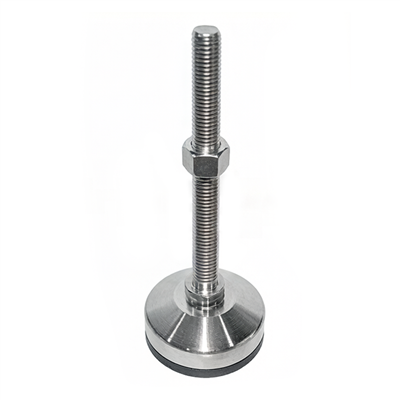
At the end of the day, leveling feet are a small part of your overall equipment setup, but they have a huge impact on performance, safety, and maintenance costs. Choosing the wrong feet can lead to downtime, damaged parts, and even safety hazards, while the right feet will keep your equipment running smoothly for years, reduce wear and tear, and save you money in the long run. Whether you’re outfitting a new workshop, replacing worn feet on existing machinery, or designing a new piece of equipment from scratch, taking the time to pick the right leveling feet is worth every minute. If you have questions about your specific application, or want to discuss custom options, feel free to reach out to our team for a consultation.
Ball Transfer References
- Machinery Installation and Leveling Best Practices, American Society of Mechanical Engineers (ASME), 2019.
- Load Distribution for Industrial Support Components, Industrial Equipment Manufacturer’s Association (IEMA), 2021.
- Environmental Resistance for Industrial Fasteners and Mounts, National Association of Corrosion Engineers (NACE), 2020.
- Vibration Dampening for Precision Manufacturing Equipment, Journal of Industrial Engineering, Volume 12, Issue 3, 2018.
- Floor Load Capacity Guidelines for Industrial Facilities, National Ready Mixed Concrete Association (NRMCA), 2022.
Taizhou Lixin Precision Technology Co., Ltd.
With abundant experience, we are one of the most reliable leveling feet manufacturers and suppliers in China. We warmly welcome you to wholesale customized leveling feet made in China here from our factory. If you have any enquiry about quotation, please feel free to email us.
Address: No. 9, Xiangyun Road, Haiyou Street, Sanmen County, Taizhou City, Zhejiang Province
E-mail: 3537908307@qq.com
WebSite: https://www.lixinprecision.com/
