If you’ve ever watched a vending machine drop a soda into a tray, or seen a factory assembly line snap parts into place with precise, rhythmic motion, you’ve witnessed a cam at work. As someone who’s spent 12 years selling precision machinery parts, I get asked this question at least once a week from clients old and new: “What exactly does a cam do in all these different machines?” It’s not a simple answer—cams aren’t just one part, and their functions shift depending on the machine, the material it’s working with, and the precision it needs. But over thousands of orders, failures fixed, and custom designs tweaked, I’ve learned their core purposes are what make entire manufacturing lines run smoothly. Today, I want to break that down, not just as a supplier who ships cams every week, but as someone who’s watched them solve real problems for small woodworking shops and large automotive factories alike. Machinery Parts
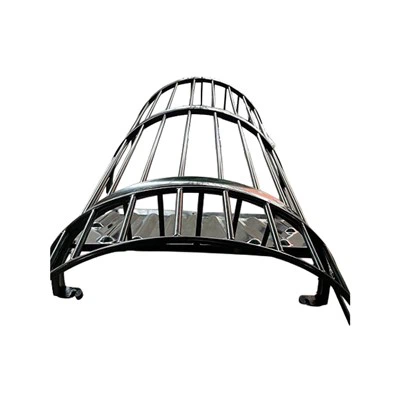
First, let’s start with the basics so we’re all on the same page. A cam is a flat or cylindrical part with a uniquely shaped surface, designed to translate rotary motion from a motor into linear or oscillating motion. That might sound jargon-heavy, so let’s use the vending machine example again: the main motor spins, and the cam’s uneven edge pushes a small lever downward at exactly the right speed, releasing the soda without jamming or dropping it too fast. The key here is that this motion isn’t random. Cam surfaces are machined to exact tolerances—usually within a few thousandths of an inch—so the movement is predictable every single time, even after millions of cycles. That precision is the foundation of all their functions, and it’s why so many of our clients come back to us for custom cams, rather than using off-the-shelf parts.
The first big function cams serve is controlling precise, timed motion. This is probably the most common use, and it’s what makes cams irreplaceable in machinery that needs coordinated steps. Let’s take a classic example: a small stamp press used for making metal washers. The machine has a feed mechanism that pulls a flat metal strip into position, a stamp that punches the washer shape, a mechanism that ejects the finished washer, and a mechanism that feeds the next strip. All of these steps have to happen in the exact right order, at the exact right speed—if the stamp hits before the strip is fully in place, you’ll bend the metal and break the stamp. Cams make this timing possible. The main drive shaft of the press has multiple cams mounted along its length, each shaped to move its corresponding lever at a specific point in the shaft’s rotation. One cam moves the feed lever to pull the strip into place, another waits until the strip is fixed, then pushes the stamp down, and a third ejects the washer before the cycle repeats. Without cams, you’d need a separate motor for each of these steps, which would be more expensive, bulkier, and harder to adjust. For our part, we work with a lot of small stamping shops that come to us when their old cams wear out—after years of thousands of cycles, the surface of a cam can get worn smooth, throwing off the timing. We machine replacement cams that match the original specs, or tweak them slightly if the shop wants to speed up their line by 10%—that’s the kind of custom work that keeps those shops running.
Another core function of cams is creating complex motion profiles that can’t be done with simpler parts like gears or linkages. Gears only produce constant, steady rotary motion, and basic linkages make linear motion that’s straight. But cams can be shaped to do almost anything—they can make a part speed up slowly, hold a position steady for a set amount of time, then move fast, or even reverse direction mid-cycle. Let’s talk about textile weaving, which is a perfect example. A loom has to interlace two sets of threads: warp threads that run lengthwise, and weft threads that cross them. To create different patterns, the loom needs to lift different warp threads at different times. Cams control this: each cam is shaped to lift a specific set of warp threads, so when the cam spins, it lifts its lever, which pulls a hook to raise those threads. If a weaver wants to make a stripe pattern, they swap out the cam for one shaped to lift different threads. What’s important here is that this motion is smooth—if the cam lifted the threads too abruptly, it would snap them, and broken threads mean lost fabric. Our team works with several textile machinery manufacturers who order high-strength steel cams for their looms, because steel holds its shape through millions of lift cycles, which is way more durable than aluminum or plastic. I once had a client from a family-owned loom in South Carolina tell us their old cams were made in the 1980s, and they still worked—they just needed new ones machined to fit, because the original manufacturer had gone out of business. That’s the kind of long-term value cams add; they’re simple, but when made right, they last decades.
Next, cams act as force transmission components for heavy-duty or high-stress applications. When a machine needs to apply a lot of force—like pressing wood for furniture, or forging small metal parts—the cam distributes that force evenly, rather than focusing it on a single point. Let’s take a wood planer, which smooths rough lumber into flat, consistent boards. The planer has rotating blades that cut the wood, but before the blades touch, a clamping mechanism holds the wood firmly in place. That clamping mechanism is driven by a large cylindrical cam, called a camshaft, that’s connected to the main drive motor. As the camshaft spins, its lobes push the clamp down with steady, even force—enough to hold the wood tight, but not so much that it splits the lumber. For high-stress cams like this, we use hardened tool steel, because it can handle thousands of pounds of force without deforming. A few years ago, we had a client who ran a custom cabinet shop call us in a panic: their camshaft on their planer had broken, and a replacement would take two weeks to arrive from their usual supplier. We had a spare blank cylindrical cam in our stock, machined it to their exact dimensions, and shipped it out overnight. They were able to get their line back running the next day, which saved them a job with a local home builder. That’s the kind of on-demand support we provide, because we know how critical cams are to keeping production moving.
Another less talked about function is converting rotary motion into precise, adjustable oscillation. Oscillating motion is back-and-forth movement, like the arm of a paint sprayer or the wiper on a car—but cams make it adjustable without needing to rebuild the entire mechanism. Let’s take a spray painter used for car parts: the spray arm needs to swing back and forth to coat a door panel evenly, and the length of the swing can change depending on whether you’re painting a sedan door or a truck door. With a cam, you don’t have to reconfigure linkages or replace parts; you just swap out the cam for one with a different lobe length. That flexibility is a big reason cams are still used instead of more modern parts like servos. Servos are great for adjustable motion, but they’re more expensive, need constant calibration, and can overheat if run 24/7. Cams, by contrast, are simple, reliable, and low-maintenance. For our part, we supply a lot of cam sets to companies that make parts for heavy equipment, where machines run around the clock with little downtime. The cams hold up to that continuous use, and swapping a cam is a 10-minute job, not a full day of tuning a servo system.
I should also mention a common misconception about cams: a lot of people think they’re only for old machinery, like steam engines or 1950s factory lines. But that’s not true—cams are still everywhere in modern machinery, including in electric cars. For example, in some electric power steering systems, a small cam adjusts the steering feel based on the car’s speed: at highway speeds, the cam adjusts to make the steering stiffer, so you don’t overcorrect, and at low speeds, it makes it easier to turn. Even in 3D printers, small cams control the movement of the print head, ensuring layers are laid down perfectly. A few months ago, we got an order from a company that makes industrial 3D printers—they needed custom plastic cams for their print bed mechanisms, because off-the-shelf cams didn’t have the precise shape needed for fine layer control. That’s a perfect example of how cams are still evolving, not just for old machinery, but for new, high-tech industries.
But with all these functions, there’s one thing that’s crucial to remember: cams only work as well as their design and manufacturing. A cam that’s machined to the wrong tolerance, or made from the wrong material, will cause downtime, broken parts, and lost money. For example, if a cam for a packaging machine is off by just 0.002 inches, the machine might seal a package too tight, or not tight enough, leading to spoiled goods or returns. That’s why, as a supplier, we don’t just sell cams—we work with clients to figure out exactly what they need. If a client has a machine that’s 20 years old, we ask for specs, photos, even a sample of the old cam, so we can machine a replacement that matches perfectly. If a client is designing a new machine, we’ll work with their engineers to test different cam shapes and materials to get the exact motion profile they need, whether that’s for a food packaging line that can’t have metal contamination, so we use food-grade plastic, or for a metal stamping line that needs high strength, so we use hardened steel.

At the end of the day, the function of a cam in machinery parts boils down to this: it turns basic rotary motion into controlled, purposeful movement that makes manufacturing efficient, precise, and reliable. Cams don’t get the spotlight the way motors or computer chips do, but they’re the unsung parts that make almost every machine work. Whether you’re a small woodworking shop, a large automotive factory, or a company making 3D printers, chances are a cam is doing the work that keeps your line running. If you’re in need of replacement cams, custom machined cams, or just want to talk through a part of your machinery that’s causing issues, we’re here to help. We’ve worked with hundreds of clients to get their lines back up and running, and we’re ready to help you too. Don’t hesitate to reach out to discuss your requirements—we’re happy to provide guidance, quotes, and fast turnaround on orders.
Deep Drawn Parts References:
Shigley, J. E., & Mischke, C. R. (1989). Mechanical Engineering Design (5th ed.). McGraw-Hill.
NASA. (2015). Cam Mechanisms for Precision Motion Control in Aerospace Applications. NASA Technical Reports Server.
Textile Institute. (2018). Mechatronics in Textile Manufacturing. Textile Institute Publishing.
American Society of Mechanical Engineers (ASME). (2020). Standards for Machining of Precision Machine Components. ASME International.
Hangzhou Zhalihui Import And Export Co., Ltd.
We are one of the most experienced machinery parts manufacturers and suppliers in China, specialized in providing high quality customized products. Please feel free to buy discount machinery parts in stock here from our factory. Contact us for quotation.
Address: Room 2801, Building 2, Taifu Plaza, No.17, Tonghui Middle Road, Chengxiang Street, Xiaoshan, Hangzhou, Zhejiang
E-mail: Chars_1979@hotmail.com
WebSite: https://www.zhalihui.com/
