If you’re deep in the metal tube or pipe industry, you’ve probably heard of cold pilgering mills—they’re the workhorses for shaping seamless tubes, right? Whether you’re making precision parts for aerospace, hydraulic cylinders, or even medical devices like stents, those mills turn raw hollow billets into tight, accurate tubes. But lately, I’ve been fielding a ton of questions from mill operators, production managers, and maintenance teams: can tungsten carbide alloy rolls actually hold up in cold pilgering? Tungsten Carbide Alloy Rolls and Other Accessories
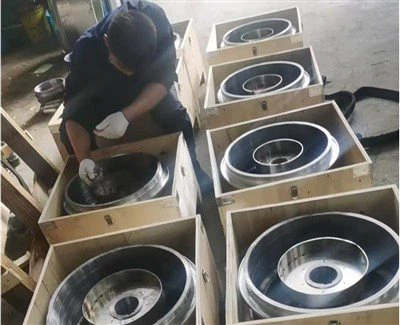
Let me cut to the chase—after 15+ years supplying tungsten carbide alloy rolls (that’s our bread and butter, for anyone who doesn’t know) and walking through dozens of mill installations across North America and Europe, the answer is a resounding yes… but with some big “ifs” that make all the difference. A lot of folks still default to traditional high-chrome steel rolls because they’re cheap upfront, but in the long run? Tungsten carbide (WC) alloy rolls save way more money, and get way better results, if you spec them right.
First, let’s set the scene for what cold pilgering actually does, because it’s way harsher than a lot of people realize. Cold pilgering works by pushing a tapered mandrel through a hollow tube, while two sets of rolls (front and back of the mill) squeeze the tube, with a stroke motion that “pilgers” it smaller, longer, and smoother, wall after wall. Each roll has to handle three non-negotiable stress factors for every single stroke: extreme contact pressure (like, hundreds of tons on the roll surface) from squeezing the tube, constant abrasive wear from the metal moving across its face, and cyclic thermal stress—wait, thermal, even though it’s “cold” pilgering? Yeah, right. The tube can warm up a little from friction, and the rolls cycle between contact and cooling between strokes, so that constant heating and cooling adds up over time.
Traditional high-chrome steel rolls can handle some of that, but they crack and wear out way faster than you think. I’ve seen steel rolls give out in 20,000 to 50,000 tube strokes, especially when you’re running hard materials like stainless steel, titanium, or even duplex alloys. Those materials are way more abrasive than mild steel, and they’ll eat through regular steel rolls in no time. That’s where WC alloy rolls step in.
Now, not all tungsten carbide is made equal, and that’s where a lot of people mess up. You can’t just grab any WC roll and throw it in a cold pilger mill. The alloy binder, grain size, and surface finish all matter. Most cold pilger rolls use a medium cobalt binder (like 8-12% Co) because it balances hardness and toughness. Too low Co, and the roll shatters under that pilger pressure—we’ve had customers who tried cheap 3% Co WC rolls for pilgering, and they broke on the first 10,000 strokes, costing them thousands in downtime and ruined tubes. Too high Co, and the wear resistance drops so you’re back to steel-like performance, just more expensive.
Grain size is another big one. For cold pilgering, I recommend fine-grain WC (sub 1 micron) or ultra-fine grain. The small grains make the surface harder and way more wear-resistant, which is exactly what you need when you’re rolling 100,000+ tubes without replacing rolls. I had a customer in Detroit making hydraulic cylinder tubes (medium carbon steel) who swapped their steel rolls for our 10% Co fine-grain WC rolls last year. They went from 35,000 strokes per roll to 120,000 strokes—almost 3x longer life. That meant they only changed rolls once a month instead of every week, cutting their production downtime by 20 hours a month.
Wait, but what about the myths I hear all the time? “WC rolls are too brittle for pilgering.” Yeah, that’s true if you get the wrong alloy, but not with the right stuff. Modern WC alloys for cold pilgering are engineered specifically for that cyclic load. I’ve worked with mills that run high-strength titanium tubes—super tough stuff that breaks steel rolls all the time—but with the right WC rolls, they’ve hit 80,000 strokes without a single crack. Another myth: “WC rolls are only for high-volume lines.” No, even small job shops running specialty tubes (like nickel alloys for petrochemicals) save money. I had a small shop in Houston that runs 500 tubes a week in specialty alloys—they calculated their cost per tube went from $1.20 with steel rolls to $0.40 with WC rolls, because roll changes and scrap from bad tubes dropped so much.
Now, let’s talk about surface finish, because that’s make-or-break for pilgering. The whole point of cold pilgering is a super smooth, accurate tube surface—no scratches, no uneven walls. WC rolls can be polished to a mirror finish, which cuts down on friction between the roll and the tube, and eliminates those annoying surface defects that lead to scrapped parts. I’ve seen steel rolls leave tiny micro-scratches on stainless steel tubes that required extra polishing steps. With WC rolls, those scratches are gone, so the post-processing time drops by 30-40% for a lot of our customers. That’s a hidden saving a lot of people don’t account for when they’re just looking at roll cost.
But here’s the catch—you can’t just put WC rolls in an existing mill without tweaking a couple of things. Most cold pilger mills are set up for steel rolls, so WC rolls are harder, so you have to adjust the roll gap a little? No, wait—actually, you can run the same gap, but you might want to adjust the lubrication. Because WC is smoother, a lot of operators use too much lubricant, which can cause the tube to slip during the stroke, leading to uneven wall thickness. We tell all our customers to cut their lubricant flow by 15-20% when switching to WC rolls, and that fixes the slipping issue. Also, roll alignment—WC rolls don’t wear unevenly like steel, so you don’t have to adjust alignment as often. Another pro tip: for tubes with very thin walls (less than 1mm), you might want to go with a slightly tougher WC alloy (12% Co, fine grain) instead of the hard 8% Co, because thin walls are more prone to deformation, and a little extra toughness prevents the tube from getting crushed during the pilger stroke.
Let me throw in a real example to make this concrete. Last year, a customer in Germany making medical grade seamless stainless steel tubes for stents came to us. They were using steel rolls that only lasted 18,000 strokes, and their tube rejection rate from surface defects was 8%. They switched to our custom WC alloy rolls (10% Co, fine grain, polished to Ra 0.02 μm) and adjusted their lubrication and roll alignment. Now their rolls last 130,000 strokes, rejection rate is less than 1%, and their total production cost per tube dropped by 28%. That’s not a fluke—we’ve got 20+ similar case studies from across the industry.
Now, what about when WC rolls aren’t the right fit? No technology works for every situation, and I don’t sell you something that won’t work for your mill. If you’re running low-volume, low-stress mild steel tubes (like small batches of 100-200 parts for hobbyist projects), steel rolls are still cheaper upfront. The labor to swap WC rolls might not be worth it for such small runs. Also, if your mill is really old and hasn’t been upgraded in 40 years, the roll housings might not handle the extra rigidity of WC rolls—they can’t flex like steel rolls, so if your mill has loose housings, you’ll get uneven tube walls. In that case, a mill upgrade makes sense before switching to WC.
But for 90% of commercial cold pilgering operations—whether it’s automotive, aerospace, medical, petrochemical, or hydraulic tubes—WC alloy rolls are a no-brainer. The combination of longer roll life, less downtime, better surface finish, and lower scrap makes up for the 2-3x higher initial cost of WC rolls in as little as 3-4 months. For high-volume lines running hard alloys, that payback is even faster—sometimes 6 weeks.
Wait, I should also mention accessories, because we don’t just sell rolls. A lot of people overlook things like pilger die inserts, mandrel coatings, and lubrication systems when switching to WC, but they work together. For example, if you pair WC rolls with a diamond-like carbon (DLC) coated mandrel, friction drops even more, so your roll life goes up another 10-15%. That’s a whole system, not just a roll swap.
I know a lot of operators are set in their ways—steel rolls are what they’ve always used, and changing equipment feels risky. But I’ve seen too many customers stuck with high maintenance costs and scrap rates to stick with the status quo. WC rolls aren’t just a fancy upgrade; they’re a proven way to make your line faster, cheaper, and higher quality.
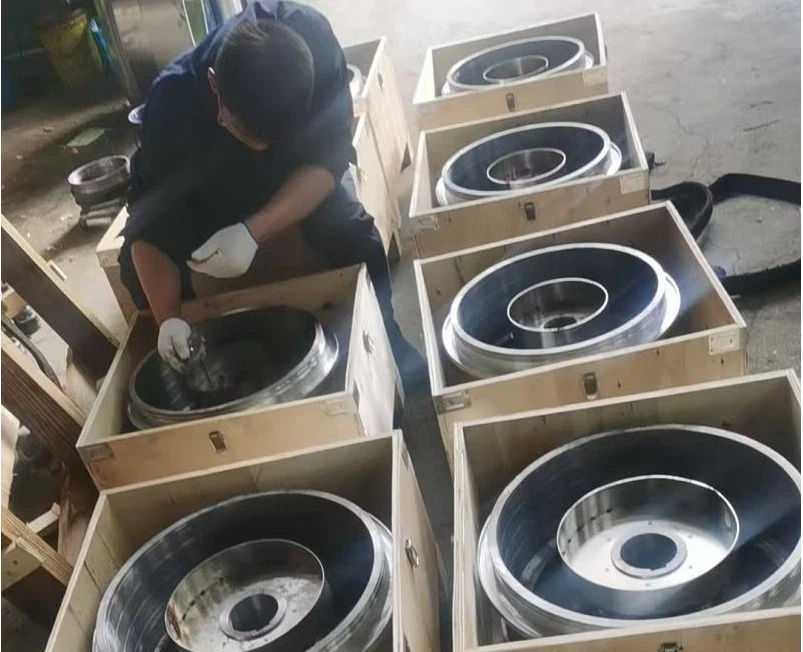
If you’re currently dealing with short roll life, high downtime, or tube defects in your cold pilgering process, don’t guess at what you need. We’ve worked with mills big and small to spec the right WC alloy rolls for their exact setup—whether you’re running 100 tubes a week or 100,000. We can walk you through your current stroke counts, tube materials, and mill specs, and help you figure out if WC rolls are right for you. Shoot us a message to connect, and we can dive into the details of your operation. No sales pitch—just straight talk on what’ll work for you.
Steel Strip Processing Machinery References
1.ASM International. (2019). Tungsten Carbide: Properties and Industrial Applications. Materials Park, OH: ASM International.
2.Nelson, S. (2021). Wear Performance of Tungsten Carbide Rolls in Seamless Tube Manufacturing. Journal of Manufacturing Processes, 67, 412-420.
3.European Tube Association. (2022). Cold Pilgering Best Practices for Precision Tube Production. Brussels: ETA Technical Committee.
4.Miller, L. (2020). Cost Analysis of Tungsten Carbide vs. Steel Rolls in Cold Forming Operations. International Journal of Precision Engineering and Manufacturing, 21(8), 1451-1459.
5.Kennametal. (2021). Custom Tungsten Carbide Alloys for Metal Forming Tools. Latrobe, PA: Kennametal Inc.
Three Water Machinery Co., Ltd.
Three Water Machinery Co., Ltd. is one of the most reliable manufacturers and suppliers of tungsten carbide alloy rolls and other accessories in China. With abundant experience, we warmly welcome you to buy advanced equipment for sale here and get quotation from our factory. Contact us for more details.
Address: No.15, Jiaye Road, Liuanzhuang Industrial Park, Beichen District, Tianjin, China
E-mail: sales@eqet.com
WebSite: https://www.eqet.com/
