Hey everyone, it’s Jake from the jumbo roll team, and I get asked this exact question at least 10 times a day: “How much does a jumbo roll cost?” If you’re here because you’re tired of getting vague quotes that start with “it depends” from suppliers, let me break this down like I would for a regular chat over coffee (minus the awkward small talk, promise). I’ve been selling jumbo rolls for 7 years, so I’ve seen every trick in the book—from suppliers lowballing you just to lock in the order only to hit you with hidden fees later, to price hikes that come out of nowhere for no obvious reason. Today, we’re cutting through the noise and talking real, science-backed numbers that actually make sense. Jumbo Roll
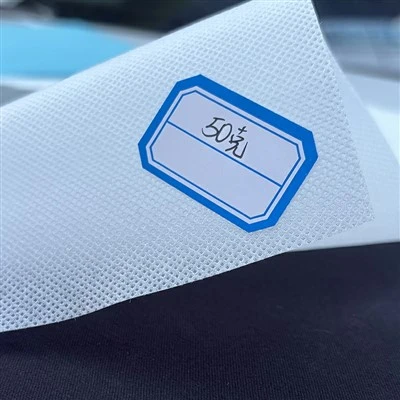
First off, let’s get one thing straight: a “jumbo roll” isn’t a one-size-fits-all item. If you think every big roll of paper is the same, you’re dead wrong, and that’s the biggest reason why quotes are all over the place. I’ve had a customer call me last week saying they got a quote of $800 for a jumbo roll, only to get another one for $2,200 two days later, and they had no clue why. Let’s start with the core factors that drive price—these aren’t random, they’re rooted in supply chain, material, and production costs, so you can actually use them to compare quotes instead of panicking.
Let’s start with the material, because that’s the biggest slice of the pie. Most jumbo rolls are for tissue products—think toilet paper, paper towels, facial tissue—or packaging, like paper for bags or boxes. For the tissue side, there are three main material grades: standard virgin pulp, recycled pulp, and blended pulp. Virgin pulp is the fancy, pristine stuff made straight from trees (usually softwood or hardwood, mixed to get that soft, strong feel), and it’s by far the most expensive right now. Over the last 2 years, virgin pulp prices have bounced around like a basketball, but as of 2024, a standard 1,000-pound jumbo roll of virgin tissue paper will set you back anywhere from $1,100 to $1,500. Wait, why the range? Because not all virgin pulp is equal—some is bleached, some isn’t, some is more absorbent, some has a higher tear resistance. For example, a bleached virgin pulp roll meant for facial tissue is going to be on the higher end of that range, while an unbleached virgin roll for bulk paper towels is a bit cheaper, around $1,050 to $1,200.
Then there’s recycled pulp, which is super popular right now because it’s way more eco-friendly. Recycled jumbo rolls are made from post-consumer paper—think old newspapers, used toilet paper (wait, no, not that part—sorted clean paper waste), and office paper. The price here is way more stable than virgin pulp, because recycled paper is a readily available commodity. As of this year, a 1,000-pound recycled jumbo roll is between $700 and $1,000. The catch here? Recycled rolls have higher variability in quality—some have more tiny bits of leftover paper fiber that make the tissue feel a bit rougher, so if you’re buying for a hotel or a luxury restaurant, you’ll pay the higher end for a well-sorted recycled roll, while a school or warehouse can get away with the cheaper, rougher stuff.
Blended pulp is the middle ground, mixing virgin and recycled fibers. It’s a sweet spot for a lot of businesses—soft enough for consumer use, cheaper than all-virgin. A 1,000-pound blended roll runs between $950 and $1,250, depending on the ratio of virgin to recycled. If you want something 50/50, that’s around $1,000; if it’s 70% virgin, that bumps you up to $1,200.
Okay, so that’s material, but what about the other big factors? Weight and size, obviously. Most jumbo rolls are measured in pounds (since paper is sold by weight) or sometimes linear feet, but weight is the standard. A 1,000-pound roll is the most common, but some are smaller (like 500 pounds) or way bigger (up to 3,000 pounds for industrial packaging). The math here is pretty simple: per pound, it’s almost the same, but you have to factor in shipping, because a 3,000-pound roll costs way more to ship than a 500-pound one. For example, if a $1,000 1,000-pound roll costs $100 to ship, a $2,900 3,000-pound roll might only cost $220 to ship (bulk shipping discounts!), so per pound total, it’s cheaper. I always tell customers to order in bulk if they can—you’ll save a ton on shipping, and suppliers usually give a 5-10% discount for orders over 10 jumbo rolls.
Then there’s the coating and specialty features. If you need a jumbo roll that’s embossed (that bumpy texture on toilet paper), or has a water-based coating that makes it more absorbent, or even has a tiny bit of lotion for premium facial tissue, that adds to the cost. Embossing alone usually adds $50 to $150 per 1,000-pound roll, and specialty coatings can add another $100 or more. Last month, a hotel client of mine wanted jumbo rolls with embossing and a faint aloe lotion, so their total per 1,000-pound roll was $1,400—way above the standard, but that’s what their luxury brand required.
Wait, what about jumbo rolls for packaging, not tissue? Good question, I don’t want to leave those folks hanging. Packaging jumbo rolls—like corrugated paper, kraft paper for boxes, or bubble paper? No, wait, bubble is plastic, we’re talking paper packaging. A standard 1,000-pound jumbo roll of kraft packaging paper runs between $600 and $900, depending on if it’s virgin, recycled, or a mix. Corrugated medium (the fluted part of cardboard) is even cheaper, around $450 to $700 per 1,000 pounds, because it doesn’t need to be as strong or smooth as tissue. That makes sense, right? You don’t need fancy softness for a shipping box.
Now, let’s talk about the hidden costs that a lot of suppliers don’t tell you, which is why their “low price” ends up being a scam. First: shipping and delivery. A lot of suppliers quote you the “ex-works” price—meaning that’s the price at their warehouse, and you pay for everything to get it to your door. That’s fine if you know that, but some will quote you “delivered” but sneak in fuel surcharges, toll fees, or storage fees if you can’t take delivery right away. I never do that—my quotes are all delivered, no hidden fees, so customers know exactly what they’re paying upfront. Another hidden cost: minimum order quantities (MOQs). A lot of small suppliers want you to buy 50 jumbo rolls at a time, which is a huge commitment if you’re a small café or a local grocery store. My MOQ is just 5 rolls, because I work with all kinds of businesses, not just big national brands.
Then there’s the elephant in the room: market fluctuations. Last year, when a big pulp mill in Canada shut down unexpectedly, virgin pulp prices jumped 18% in 2 months, and a lot of suppliers tried to pass that cost on retroactively. I don’t do that either—if I quote you a price, it’s locked in for 30 days, no matter what happens to the market, because I know how frustrating it is to get a quote and then see it go up before you even place the order. That’s why my repeat customers stick around—they don’t have to worry about last-minute price hikes.
Let’s put this all together with real examples, because numbers are better when you can see them. Let’s say you’re the owner of a small hotel with 20 rooms, and you need jumbo toilet paper. You want a decent quality, not cheap, but not luxury. That’s a blended pulp roll, 1,000 pounds, unembossed. As of 2024, delivered to your door, that’s around $1,000 to $1,100 per roll. If you order 10 rolls at a time, that’s $950 per roll, plus tax, so total around $10,000 for 10 rolls, which will last you about 3 months for 20 rooms. That’s a number you can actually budget for, right?
Another example: a small e-commerce business that ships 100 packages a day, needs packaging paper rolls. Recycled kraft paper, 2,000 pounds (so two 1,000-pound jumbo rolls), delivered. That’s around $800 per roll, so total $1,600 for two rolls, which will last them about a month. Way more affordable than buying small bundles at a grocery store, that’s for sure.
Now, let’s talk about what to avoid when you’re getting quotes. If a supplier quotes you a jumbo roll for $500, that’s way too low, and it’s probably low-quality recycled pulp or even a mix of recycled pulp and garbage—stuff that falls apart when you use it, gets clogged in your dispensers, and costs you more in wasted product. On the flip side, if a supplier quotes you $3,000 for a standard virgin pulp roll, that’s way too high—they’re either marking it up way too much, or they’re adding a bunch of hidden fees that they’ll later remove to make you feel like you got a good deal.
Wait, also, size matters for dispensers! A lot of people forget that their existing dispensers only fit certain jumbo roll dimensions. For example, some commercial toilet paper dispensers take 9-inch diameter jumbo rolls, others take 12-inch. If you buy a roll that’s too big, it won’t fit, and you’ll have to buy a new dispenser, which adds hundreds of dollars in cost. That’s another thing I factor into quotes—if you tell me your dispenser size, I can tell you exactly which roll you need, so you don’t have to waste money. I’ve had so many customers make that mistake, and it’s such a avoidable hassle.
Let’s get back to the original question: “How much does a jumbo roll cost?” The short, honest answer is: it depends, but not in a vague way. It depends on what it’s made of, the size/weight, any special features, and how much you order. But the long answer, which is the one that actually helps you, is that a standard quality, in-stock jumbo roll (whether tissue or packaging) will run you between $700 and $1,500 per 1,000 pounds, delivered. If you need specialty features, it goes higher, if you order in bulk, it goes lower.
I’ve been in this game long enough to know that price isn’t the only thing that matters. I had a customer last year who went with the cheapest quote they found—$650 per roll, which was $50 cheaper than mine. Two weeks later, they called me panicking because the rolls were so thin they fell apart after 2 uses, and their maintenance team was dealing with clogged dispensers every other day. They ended up paying more in wasted product and emergency repairs than they would have if they’d just gone with my higher-quality rolls. That’s the thing to remember: you get what you pay for, but that doesn’t mean you have to overpay for nothing.
If you’re a business owner shopping for jumbo rolls, my best advice is to stop chasing the lowest price and start asking the right questions: What’s the material grade? Is the price delivered, or are there hidden fees? What’s the MOQ? Can you lock in a price for 30 days? Do you have rolls that fit standard dispensers? All these questions will help you get a real, accurate quote instead of a sales pitch.

I’m here to help, no pressure at all. If you have no clue what kind of jumbo roll you need, or if you just want a no-obligation quote that actually makes sense for your business, hit me up. I don’t do fancy sales pitches, I don’t hide fees, and I’ll tell you straight up if my price works for your budget or if you’d be better off going with someone else (though I’d love to hear from you either way). At the end of the day, I’m not just a supplier—I’m in the business of helping businesses save money and stop dealing with the headache of bad product.
PP Non-woven Fabric References:
- Pulp and Paper Products Council. (2024). Global Pulp Price Index Report.
- American Forest & Paper Association. (2024). Recycled Paper Market Trends and Pricing Analysis.
- Commercial Restroom Supplies Association. (2023). Jumbo Roll Specs and Industry Pricing Standards.
- U.S. Department of Agriculture Forest Service. (2024). Virgin Softwood Pulp Market Volatility Update.
Zhejiang Guowang Packaging Co., Ltd.
Zhejiang Guowang Packaging Co., Ltd. is one of the most professional jumbo roll manufacturers and suppliers in China, featured by quality products and low price. Please rest assured to buy customized jumbo roll made in China here from our factory. Also, pricelist is available.
Address: Youbu Town, Lanxi City, Zhejiang Province, China
E-mail: Nicole@guowangtape.com
WebSite: https://www.guowangtape.com/
