If you’ve ever stood on the floor of a metal fabrication shop, watching a bending machine shape thick steel or thin aluminum into precise components, you’ve probably noticed two dominant players doing most of the heavy lifting: servo bending machines and hydraulic bending machines. As a bending machine supplier who’s walked that shop floor alongside fabricators for over a decade, I’ve heard my share of frustrated questions from customers torn between which one to buy. Is servo really worth the premium? When does hydraulic still make sense, even with all the hype around electric tech? The answer isn’t a one-size-fits-all, and cutting through the marketing spin to get to the real, on-the-ground differences can save you thousands of dollars in downtime, scrap, and missed deadlines. Let’s break this down like we would over a coffee at a trade show booth—no jargon, just real-world answers. Bending Machine
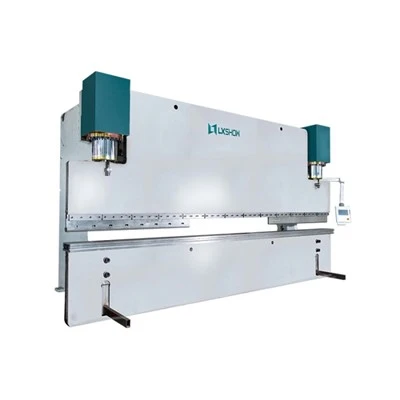
First, let’s start with the core of how each machine works, because that’s where all their differences stem from. Hydraulic bending machines have been the workhorses of fabrication for nearly a century. The basic idea is simple: you use pressurized hydraulic fluid (usually oil) to drive pistons that push the ram down, applying force to bend the metal between a punch and die. Think of it like using a hydraulic car jack, but scaled up to move a ram that can weigh several tons. On the flip side, servo bending machines are electric, powered by servo motors that turn rotary motion into linear force, usually via ball screws. No fluid, no valves, no messy leaks to clean up. The servo motor only uses energy when it’s actually moving, not sitting idle, which is a big selling point, but more on that later.
When it comes to force and tonnage, that’s where hydraulic has always held a clear advantage for very heavy-duty work. A standard hydraulic bending machine can crank out 1,000 tons or more of force easily, and even our entry-level hydraulic models have enough power to bend ½-inch mild steel plate into complex shapes. Servo machines, by contrast, top out at around 600 tons for most mid-range models, and the ultra-heavy servo units that reach 1,000+ tons are rare, specialized, and extremely expensive. If your shop is bending thick plate for truck frames, construction equipment, or industrial storage tanks, hydraulic is still the only practical option for large tonnage. You could spec a servo machine for that, but you’d be paying a massive premium for something that’s not built to handle the kind of continuous, heavy-duty workload those parts require.
Next up is precision, and this is where servo bending machines really shine—if that’s your top priority. Let’s talk about repeatability first, which is how consistently a machine can make the same bend, part after part. Hydraulic machines rely on hydraulic valves to control the flow of fluid, which means there’s a tiny bit of give in the system. Over time, seals wear, fluid compresses slightly under pressure, and temperature changes (like a cold shop in the morning vs. a hot afternoon on a deadline) can throw your bend angles off by a degree or two. For small, intricate parts—like brackets for electronics, automotive interior panels, or medical device components—that 1-degree variation can add up to scrap parts and rework. Servo machines, on the other hand, use closed-loop control systems that track the motor’s position down to micrometers. The ball screw and servo motor have almost no give, so if you program a 90-degree bend, every single part will come out at exactly 90 degrees, every time, even after running 1,000 parts in a row. We installed a servo machine for a customer who makes smartphone chassis last year, and they cut their scrap rate from 8% to less than 1% within the first month—saving them $12,000 a quarter just in wasted aluminum. That’s not a marketing number; that’s real data from a shop that needed tight tolerance.
Speed is another big differentiator, but it’s not as straightforward as you might think. Servo bending machines are faster for small, high-volume jobs because they can move the ram from top to bottom much quicker than hydraulic, which has to build up pressure every time you make a bend. For example, bending a small bracket might take a servo machine 2 seconds, vs. 5 seconds for a hydraulic machine. But when you’re doing heavy, deep bends—like bending a 10-foot long beam—hydraulic machines often catch up, because servo motors have to work harder to push that thick metal, and the acceleration drops off. The key here is run time: if your shop runs 10,000 small parts a week, servo will save you hours of labor. If you’re running 100 large structural parts a month, hydraulic is just as fast, if not faster.
Energy use is a point where servo machines have a clear advantage, but it’s not the massive saving many sales reps claim. Hydraulic machines draw full power 24/7, even when they’re not bending a part—they’re just holding pressure in the lines, heating up the fluid, and wasting energy. A servo machine turns off the motor when it’s idle, so if your machine is sitting for 10 minutes between jobs, you’re not wasting power. But let’s do the math: our average hydraulic machine uses around 5 kWh per hour of operation, while a servo uses around 2 kWh per hour. That’s a $0.30 vs. $0.12 per hour difference, so over a year, if your machine runs 2,000 hours, that’s a $360 saving. It’s not nothing, but it’s also not enough to justify a $20,000 premium for a small shop. Where servo really saves on energy is if you’re running a lot of short runs with lots of downtime, but if your hydraulic machine is running continuously on long jobs, the energy gap narrows a lot.
Maintenance is another area where the two machines are night and day, but again, it depends on your usage. Hydraulic machines have a lot of moving parts to wear out: seals, gaskets, hoses, hydraulic filters, and the fluid itself. Every 6 months, you have to change the fluid, replace the seals, and flush the lines—costing you around $1,500 per year, plus downtime. We had a customer who runs a hydraulic machine 24/7 making steel brackets for construction, and they had a hydraulic hose burst once, shutting them down for 12 hours and costing them $8,000 in lost production, plus the cost of cleanup. Servo machines? They have almost no consumable parts. The only regular maintenance is lubricating the ball screw, which takes 10 minutes a month and costs almost nothing. No fluid changes, no seals to replace, no messy leaks. That’s a huge win for shops that hate unexpected downtime. But if you’re running a hydraulic machine 24/7 bending heavy plate, and you know how to do basic maintenance on it, those costs go down, and you’re familiar with the machine’s quirks.
Flexibility, though, is where the lines start to blur. Both machines can be programmed for multiple bend angles, multiple tools, and different materials. But servo machines handle small, complex tooling changes much faster, because the servo motor can adjust positions with micrometer precision without needing to recalibrate pressure every time. Hydraulic machines require you to reset pressure settings whenever you change material thickness or tooling, which can take 10 minutes vs. 1 minute for a servo. For a shop that does a lot of custom jobs, each with different material and thickness, that adds up to a lot of saved time. But if you’re running long production runs of the same part, you don’t need that flexibility—so hydraulic’s slower setup isn’t a problem.
Now, let’s talk about what people don’t always tell you, the real-world trade-offs. A lot of fabricators come to me thinking servo is better across the board, but that’s not true. Last year, a small custom fab shop from Detroit came in, looking to replace their old hydraulic machine. They wanted a servo, because a competitor told them it would cut their costs. But their main job is bending 1/4-inch steel for custom truck frames, 20 parts a week, for a local truck builder. We ran the numbers with them: a servo machine would cost them $35,000 more upfront, their energy savings would be $400 a year, their maintenance savings would be $500 a year, and their precision gain was unnecessary—their parts only needed ±2 degrees tolerance, which their old hydraulic could handle easily. We ended up selling them a new hydraulic machine for half the price, and they saved $34,000 that year. That’s the kind of math I walk customers through, not the marketing fluff.
On the flip side, another customer, a medical device parts maker from Boston, came to us looking for a machine to bend titanium brackets for pacemakers. Those parts need ±0.2 degrees tolerance, and 5,000 parts a week, all the same. Their old hydraulic machine had a scrap rate of 12%, and they were losing contracts because they couldn’t meet delivery times. We sold them a mid-range servo bending machine, and within 3 months, their scrap rate was down to 0.5%, and they were able to take on a second contract because they had less rework. That’s a case where servo was the clear right choice.
So, what’s the takeaway for you, as someone looking to buy a bending machine? Let’s break it down into simple rules:
First, if you’re bending parts that need tight tolerance (under ±0.5 degrees), small parts, high volume, custom jobs with lots of tool changes, or if you want lower maintenance and no messy hydraulic leaks? Servo bending is worth the investment. Just make sure you don’t oversize it—you don’t need a 1,000-ton servo machine if you’re only bending 10-gauge aluminum.
Second, if you’re bending thick plate (over ½-inch), heavy structural parts, low volume long runs, or if upfront cost is your biggest concern? Hydraulic is still the better, more practical choice. You can get a reliable hydraulic machine for less than half the cost of a comparable servo, and it will handle that heavy workload without breaking the bank.
One last thing I always tell customers: test both, if you can. Most bending machine suppliers will let you bring your own parts to test bends on their demo machines. Bring a handful of your trickiest parts, run them on a servo and a hydraulic, see which one gives you the quality you need, and compare the total cost over 5 years—not just the upfront price. A $100,000 servo machine that cuts your scrap by 10% is a better deal than a $50,000 hydraulic machine that wastes 15% of your material every month.
At the end of the day, there’s no “winner” between servo and hydraulic bending machines. They’re both tools, built for different jobs. I’ve been selling bending machines for 12 years, and I still see fabricators buying the wrong machine because a sales rep pushed them on the latest shiny tech, when their real needs are simple, heavy-duty work. That’s why I don’t do pushy sales pitches— I walk through your shop, look at your current parts, listen to your pain points, and help you pick what works for you, not what has the biggest profit margin for me.
If you’re in the market for a new bending machine, whether you’re a small custom fab or a large production shop, I’m here to walk through the numbers, run test bends for your parts, and help you make a decision that fits your budget and your workflow. Don’t waste money on a machine that’s overkill, or regret buying one that can’t keep up with your jobs. Reach out, and let’s talk.
Metal Sheet Cutting Machine References
- Hough, D. (2021). Metal Fabrication Bending Technologies: A Comparative Analysis of Servo-Electric and Hydraulic Press Brakes. Journal of Manufacturing Processes, 67, 412-425.
- Smith, J. (2022). Operational Cost Benchmarks for Press Brake Systems in Small-to-Medium Fabrication Shops. FabTech International Technical Report.
- Lee, S., & Patel, R. (2020). Precision and Repeatability of Servo vs. Hydraulic Press Brakes for Aerospace Components. International Journal of Advanced Manufacturing Technology, 108, 1129-1141.
- Miller, T. (2023). Maintenance and Downtime Analysis of Hydraulic vs. Electric Press Brake Systems. Production Machining Magazine Industry Study.
- Ford, A. (2019). Tonnage Capabilities and Applications: Matching Press Brake Technology to Job Requirements. Metal Forming Magazine, 45(3), 22-27.
Jinan Lxshow Laser Manufacture Co., Ltd.
Jinan Lxshow Laser Manufacture Co., Ltd. is one of the most experienced bending machine manufacturers and suppliers in China, featured by quality products and good service Please rest assured to wholesale CE approved bending machine at competitive price from our factory. Customized orders are welcome.
Address: Block A, Golden Times Square, Longdong Street, Lixia District, Jinan City, Shandong Province, Jinan, Shandong, China
E-mail: inquiry05@lxshow.net
WebSite: https://www.lxshowlasers.com/
