Hey everyone, if you’re running a refrigerated truck body business or just someone who needs to keep perishables (like fresh produce, meds, or frozen snacks) cool during long hauls, you know the door is the weakest link. I’m Jake, part of the team at our refrigerated truck body supplier, and over the past 12 years, we’ve fixed way too many doors that were leaking cold air, costing our clients thousands in wasted fuel and spoiled goods. Today I’m breaking down exactly how to insulate those doors right—no fancy jargon, just stuff that actually works for real trucking jobs. Refrigerated Truck Body
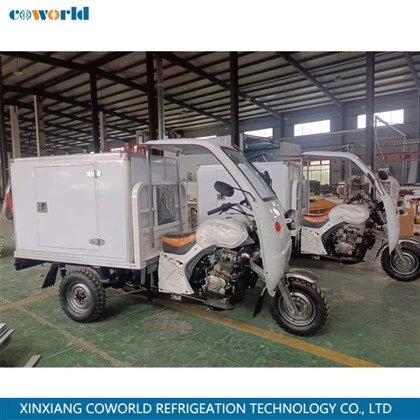
First off, let’s talk why door insulation is such a big deal. I’ve seen clients skip this step to save a few bucks on their initial build, and six months later, they’re calling us because their reefer unit is running 24/7 instead of 18 hours a trip. That’s not just about spoiled strawberries—fuel costs go through the roof, and if you’re hauling temp-controlled pharma, a bad door can tank a whole shipment and put you out of compliance. The door takes way more abuse than the walls or ceiling, right? It opens and closes a hundred times a week, slams shut from a driver rushing, and gets banged by loading docks. So whatever insulation you use has to handle that, not just sit there and look nice.
Let’s start with the basics: the door core. A lot of cheap suppliers use plain foam, but not all foam is equal. We’ve tested two main types for our truck doors over the years, and here’s what you need to know. First, polystyrene (EPS) foam—it’s lightweight, cheap, and holds shape pretty well. But here’s the catch: it’s not dense enough to stop airflow if there’s a gap, and it absorbs moisture if the door gets scratched. Moisture is the enemy, by the way—once foam gets wet, its insulating value drops like a rock, because water conducts heat way better than air. So EPS is only good for short-haul, light-use doors, not cross-country runs where a door might get kicked or scratched regularly.
The other foam we swear by is polyurethane (PUR) foam, closed-cell specifically. That’s what we use for all our standard doors now. Closed-cell PUR is dense, it’s rigid, and it has tiny, closed-up bubbles that don’t let moisture in at all. We use a 2.2 lb density for our doors—any lower and it flexes too much when opening/closing, any higher and we’re adding unnecessary weight, which kills fuel efficiency. I once had a client who tried a 1.8 lb foam door for their 1,500-mile runs; by month four, the door was warped, the foam was separating from the metal, and they were losing 12% of their refrigeration capacity. That’s the kind of mistake we help people avoid.
Wait, there’s also polyisocyanurate (PIR) foam, right? That’s a step up from PUR, with even higher R-value per inch. But it’s way more brittle, so it cracks easily if the door takes a hit from a pallet or a dock plate. We save PIR for niche jobs, like refrigerated doors for specialized vans that never touch a loading dock. For regular semi-truck doors, PUR is the sweet spot—balances insulation, durability, and weight.
Next step: sealing the edges, and this is where most people mess up. Even if your core foam is perfect, if there’s a gap between the door and the truck frame, cold air is leaking out, warm air is getting in, and all your work is for nothing. I’ve seen drivers just spray a little silicone around the edge and call it a day, but that’s temporary. Silicone breaks down in extreme temps—like if you’re hauling frozen food through Wyoming in January, or fresh fish through Texas in July, that silicone cracks within months.
What do we use? Two-part foam gaskets, specifically EPDM rubber-coated ones. Here’s the trick: you don’t just glue the gasket to the door. You attach a metal retainer track around the entire door frame, then snap the EPDM gasket into that track. Why? Because if you ever need to replace the gasket (which you will, after a year or two of constant use), you don’t have to take the whole door apart. You just pop the old gasket out and snap a new one in—takes 10 minutes, no special tools. And EPDM is way better than regular rubber or silicone; it stands up to temps from -40°F to 180°F, it resists UV, and it doesn’t crack when the door slams. We also add a second, thinner “weep gasket” at the bottom of the door. Wait, you’re probably thinking, “Weep gasket? For what?” If moisture does get trapped between the door and frame, the weep gasket lets it drain out instead of sitting there and rotting the metal. I learned that the hard way with a client in Florida—they skipped the weep gasket, and after a year, the bottom of the door was rusted through and we had to replace the whole thing.
Oh, and don’t forget the hinge and lock areas—those are tiny gaps that add up. Every time you open the door, cold air escapes through the hinge, and warm air comes in. We add small, custom rubber gaskets around each hinge pin, and a thick gasket around the latch mechanism. Some cheap suppliers just leave those areas bare, and I can attest: over a year, that adds up to 5-7% more refrigeration run time. That’s money in the trash.
Now, let’s talk about prep work, because if you skip prep, nothing else works. When you’re building the door, you have to make sure the metal shell is perfectly smooth and free of debris. No rust, no dents, no leftover paint chips. If you pour foam into a dented door, the foam won’t fill that dent, so you’ll have a gap where insulation is missing. We always sand the inner shell with 80-grit sandpaper, wipe it down with isopropyl alcohol to get rid of any oil or grease, then prime it before pouring the foam. That way, the foam sticks to the metal, no separation down the line.
Wait, what about door skins? The outer and inner metal layers of the door, right? We use 22-gauge steel for the outer skin, and 24-gauge for the inner. If you go thinner than that, the door flexes when you open it, which pulls on the gaskets and creates gaps. We also powder-coat the outer skin, not paint it. Powder coating is way more durable—resists chips from pallets, scratches from loading docks, and UV damage. The inner skin gets a food-grade epoxy coating, which is important if you’re hauling produce, meat, or any food that can leave residue. No weird chemicals leaching into your cargo, and it’s easy to wipe down.
Testing is non-negotiable for us, too. Once we build a door, we send it to our in-house test bay. We put it in a temperature-controlled chamber, set it to 0°F, and measure how much cold air leaks through the door over 24 hours. If it doesn’t hit our minimum R-value of R-28 (that’s for the whole door, not just the foam), we strip it down and fix it. I’ve had techs tell me “it’s fine, the client will never notice,” but no—our reputation is built on stuff that actually works, not cutting corners.
Now, what about maintenance? Because even the best door insulation won’t last forever if you don’t take care of it. We give all our clients a free maintenance checklist when they take delivery. First, every three months, inspect the gaskets. Look for cracks, tears, or spots where the gasket is pulled away from the door frame. If you see a tiny tear, you can cut a small piece of EPDM gasket and glue it over the spot—no need to replace the whole thing. Second, wipe down the bottom of the door once a month, especially if you’re hauling produce or fruit juice, which can get sticky and block the weep holes. Third, lubricate the hinges and latches every six months with a silicone-based lubricant, not WD-40—WD-40 dries out rubber gaskets and attracts dirt.
I’ve got a real example to drive this home. Last year, a local produce hauler brought in a used refrigerated truck that they’d bought from a “discount” supplier. The doors had 1.8 lb EPS foam, a single silicone gasket, no weep holes, and the hinge areas were bare. They were losing $1,200 a month in extra fuel and spoiled lettuce. We replaced the foam with 2.2 lb PUR, added EPDM gaskets all around, fixed the weep holes, and sealed the hinges. Six months later, they told us their fuel bill dropped by $950 a month, and spoiled cargo was down to almost nothing. That’s the difference between doing it right and cutting corners.
Wait, what if you already have a door that’s not insulated well? Can you retro-insulate it, instead of buying a whole new door? Yeah, you can, but you have to do it right. First, take the door off the frame, remove the outer skin. Clean the inner shell, then add closed-cell spray foam. Make sure you spray it evenly, no gaps, and cut it to fit if there are wires or hinge mounts. Then reattach the outer skin, and install a new EPDM gasket around the frame. But I will say: retro-insulating is half as effective as a new door built with the right materials, and it’s almost as much work as buying a new door. So if your doors are more than five years old, it’s probably better to just upgrade.
Common mistakes I see all the time: skipping the weep gaskets, using cheap foam, using silicone instead of EPDM, not prepping the metal before installing insulation. These mistakes add up fast. I once talked to a guy who owned a small fleet of 10 reefer trucks, all with doors that were badly insulated. He told me he was spending $15,000 a year extra on fuel because of bad doors. That’s $15,000 he could’ve used for driver bonuses or new tires, just wasted because he tried to save $500 per door upfront.
At the end of the day, refrigerated truck door insulation isn’t rocket science, but it’s not something you can half-ass. It’s the thing that keeps your cargo cold, keeps your costs down, and keeps your business running. If you’re in the market for new doors, or need to upgrade the ones you have, don’t go for the cheapest option. Go for one that uses closed-cell PUR foam, EPDM gaskets, and is built to last.
If you’re ready to stop wasting money on bad insulation and get doors that actually work for your hauls, hit us up. We can walk you through exactly what you need, whether you’re a small business with two trucks or a big fleet with 50. No pushy sales stuff, just straight answers based on 12 years of building and fixing refrigerated truck bodies.
Refrigerated Tricycle References
- Refrigerated Transport Association. (2022). Best Practices for Reefer Unit and Cargo Area Maintenance.
- International Institute of Refrigeration. (2021). Thermal Insulation for Refrigerated Transport Vehicles.
- U.S. Department of Energy. (2020). Guide to Insulating Commercial Truck Cargo Areas.
Xinxiang Coworld Refrigeration Technology Co., Ltd.
As one of the most professional refrigerated truck body manufacturers and suppliers in China, our products have good reputation in the market. We warmly welcome you to buy cheap refrigerated truck body for sale here from our factory. If you have any enquiry about cooperation, please feel free to email us.
Address: B103 ROOM, GT CITY, NO.199 ZHENGZHONG ROAD, HIGH TECH ZONE, XINXIANG CITY, HENAN PROVINCE, CHINA
E-mail: coworldfrio@hotmail.com
WebSite: https://www.coworldthermo.com/
