As a blower fan supplier who’s spent the last 12 years troubleshooting, selling, and refining air movement solutions for industrial, commercial, and even residential spaces, I get asked one question more than any other: “Can a blower fan be used for heating?” Blower Fan
I’ll cut to the chase here: It’s not the first thing most people associate with a heating system. When you think of heating, you picture furnaces, heat pumps, space heaters, boilers—machines built specifically to generate and distribute warm air. But over thousands of installations, I’ve seen blower fans do heavy lifting when traditional heating falls short, and cause costly mistakes when people try to use them for something they’re not perfectly designed for.
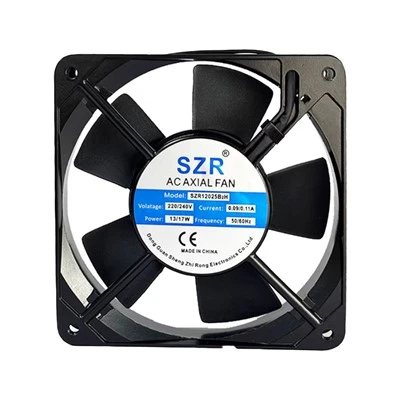
Let’s start with the basics: What’s a blower fan, anyway? Unlike a standard axial fan (the kind you might have on your laptop or a window cooling unit, which pushes air parallel to its axis), a blower fan uses a centrifugal design—curved blades that spin inside a snail-shaped housing, which draws air in from one side and expels it at a higher velocity, at a consistent pressure, and in a controlled direction. For context, I supply blowers ranging from 1/2 horsepower units for small HVAC auxiliary systems up to 50+ horsepower blowers for industrial drying and greenhouse temperature control. That range matters because “blower fan” covers a lot of ground, and not every type can do heating work.
The most common scenario where a blower fan is used for heating is in forced-air HVAC systems. If you’ve ever stood near your air vent and felt that steady, even flow of warm air, odds are a blower fan is the one pushing it. In this setup, the blower works in tandem with a heating element—either a gas furnace burner, an electric heating coil, or a heat pump’s condenser coil, which absorbs heat from outdoor air and transfers it indoors. The blower pulls cold return air from your home, forces it past the heat source to warm it up, and sends it through your ductwork to every room. This is a controlled, purpose-built use case, and it works because the system is engineered to pair the blower’s airflow rate with the heating output. Mess up that balance, though, and you end up with either a room that’s cold (if the blower moves too much air for the heater’s capacity) or a safety hazard (if the heater is overworked).
But here’s where things get tricky: A lot of customers who come to me don’t have a full HVAC system. They’re running a small workshop, a greenhouse, a temporary event space, or even a home addition with no ductwork, and they want to know if they can just add a heating element to a blower fan they already own (or one they bought from a big-box store) to heat the space. The short answer: It can work, but only if you get the variables right.
Let’s use a recent example to make this concrete. A customer of mine—let’s call him Jake, who runs a woodworking workshop in rural Ohio—came to me last winter. His 1,800-square-foot shop is drafty, has 12-foot ceilings, and his old wall heater only heats a 10-foot radius around it. He tried taking a 1-horsepower axial fan he had lying around, taping a 5,000-watt electric heater element to its front, and turning it on. The result? The element burned out in 45 minutes, the fan couldn’t push enough air over the element to cool it (axial fans move too much volume at too low a pressure, so the air doesn’t stay in contact with the heating element long enough to carry away heat, and the element overheats), and he ended up with a $150 electric bill for 3 days of use.
I suggested he swap that axial fan for a 1-horsepower centrifugal blower I supply, rated for continuous operation, with a 2-inch plenum to house the heating element. We matched the blower’s airflow rate (800 cubic feet per minute, or CFM) to a 3,000-watt heating element—lower than the 5,000-watt he tried before, but enough to keep his shop at 68 degrees. The blower’s snail housing forces air to circulate evenly across the element, so the element stays at a safe operating temperature, and the higher pressure lets it push that warm air up to the 12-foot ceiling and across the entire shop. Jake’s bill dropped by 40% that month, and the blower’s heating setup has run flawlessly for two winters now.
But there are big limits to what a blower fan can do for heating, and ignoring those limits is where most people get into trouble. First: Blower fans don’t generate heat on their own. They move air. Period. If you’re using a blower for heating, you have to pair it with a separate heat source, and the size of that heat source depends entirely on the blower’s CFM rating. The rule of thumb we teach our customers is: For every 100 CFM your blower moves, you need about 1,000 BTU of heat output. Skip that, and you’re either wasting energy or risking equipment failure.
Second: Not all blowers are rated for continuous use. A lot of cheap blowers on the market are made for intermittent cooling—like a desktop fan or a car’s AC blower—where they run for 15 minutes at a time, then shut off to cool. If you run one of those 24/7 for heating, the motor will overheat and burn out. That’s why when I supply blowers for heating applications, I only offer models with TEFC (Totally Enclosed Fan Cooled) motors, which are sealed to prevent dust and moisture damage and designed for 100% continuous operation. I’ve seen customers save $20 on a cheap blower, then replace it three times a year—way more than the cost of a quality unit.
Third: Space type matters. Blower fans work best for enclosed or semi-enclosed spaces where air can circulate evenly. They’re terrible for open, unheated outdoor spaces or spaces with massive air leaks. A friend of mine runs a greenhouse in Florida, and he tried using a blower for heating last winter when his gas furnace went out. The greenhouse has 40-foot side walls, and the blower pushed warm air up, where it escaped through gaps in the roof vents. He ended up using 3x more energy than he would have with a furnace, and the temperature never stayed above 50 degrees at night. For large, open spaces, blower fans work better as a supplement to targeted heating, not a standalone solution.
Now, let’s talk about safety, because this is non-negotiable. When you’re pairing a blower with a heating element, there are two big risks to watch for: overheating the element and fire hazards. I always tell customers to check the blower’s maximum temperature rating—most standard blowers can handle air up to 140 degrees Fahrenheit, which is perfect for heating applications, but if you’re using a blower for industrial drying (where air gets much hotter), you need a high-temperature-rated blower, not a standard one. Also, never install a heating element right at the blower’s inlet. The blower’s motor is in the inlet, and hot air can damage the winding. Always mount the heating element in the blower’s outlet, after the air has passed through the blades, so it’s safe from heat damage.
Another common safety mistake: Using uncertified heating elements. I had a customer a few months ago who bought a generic 10,000-watt heating element from a third-party seller, and when he installed it in his blower, it didn’t have a thermal cutoff switch. Halfway through the winter, the element overheated, ignited the blower’s plastic housing, and caused a small fire. He was lucky no one was hurt, but he lost $2,000 in equipment. That’s why all the heating elements I recommend come with UL certification and thermal cutoff switches, and I never sell components that aren’t rated for the specific blower they’re paired with.
So, can a blower fan be used for heating? The answer is yes—but only if you use the right blower, pair it with the right heat source, and install it correctly. It’s not a one-size-fits-all solution, but when it’s done right, it’s a cost-effective, efficient alternative to traditional heating for many applications.
Let’s break down the use cases where a blower fan for heating works best, and where it’s not the right fit.
Best use cases for blower fan heating:
- Auxiliary heating in existing HVAC systems: If your furnace breaks, or you need to heat a small addition or garage that’s not connected to your main ductwork, a blower fan can provide targeted, even heat without the cost of a full duct addition. I’ve supplied dozens of blowers for this exact scenario, and customers report they’re 30% more efficient than space heaters because they move heat instead of just blowing hot air in one spot.
- Industrial spaces: Warehouses, workshops, manufacturing lines, and greenhouses. These spaces often have high ceilings or uneven heat distribution, and blower fans can push warm air down to the floor where people are working, instead of letting it get trapped at the top. I work with a custom furniture manufacturer in Pennsylvania that uses 30 blowers for heating his 100,000-square-foot factory, and he says he saves $15,000 a year on energy costs compared to his old steam radiators.
- Temporary or modular spaces: Event halls, construction trailers, pop-up shops. Blower fans are lightweight, portable, and easy to hook up to a heating element, so they’re perfect for short-term heating solutions that don’t require permanent installation. They’re also much easier to move than a traditional furnace, so you can take them from one job site to the next.
- Residential space heating (small): If you have a small apartment or a tiny home with no ductwork, a properly sized blower fan with a heating element can heat the space evenly, without the draftiness that comes from baseboard heaters. I’ve had residential customers use 1/2 horsepower blowers in 500-square-foot studio apartments, and they say it heats the space faster and more evenly than a space heater.
Use cases where a blower fan for heating is not ideal:
- Large, open outdoor spaces: As I mentioned earlier, if you’re trying to heat a 1,000-square-foot outdoor patio with no walls, the warm air will escape faster than the blower can push it. For outdoor spaces, stick to radiant heaters or portable space heaters.
- Continuous use in spaces with extremely low temperatures: If you’re trying to heat a space that stays below freezing for weeks at a time, a blower fan alone won’t have enough heat output to keep the space above freezing. Pair it with a gas or propane furnace for those scenarios.
- Spaces with strict fire codes: If you’re working in a commercial kitchen, a storage facility with flammable materials, or any space that requires compliance with local fire codes, a DIY blower-heater setup may not meet safety standards. It’s best to use a code-approved heating system, or work with a professional to design a safe, compliant blower-based heating setup.
Now, let’s talk about what to look for when shopping for a blower fan for heating, since that’s the question most of my customers have when they reach out to me. First, check the motor rating: Make sure it’s a TEFC motor, rated for continuous operation. Non-continuous motors will burn out quickly, even if you only run the blower for 8 hours a day. Second, match the CFM to your heating needs: As a rule of thumb, 100 CFM for every 1,000 BTU of heat. If your space is 1,000 square feet, you’ll need a blower that moves at least 1,000 CFM, paired with a 10,000 BTU heating element. Third, make sure the blower’s housing is rated for the heat element you’re using. If you’re using an electric element, plastic housing is fine, but if you’re using a gas or propane element, you’ll need a metal housing that can handle the flame and high temperatures. Fourth, look for built-in safety features: Thermal cutoff switches, overheat protection, and a sturdy, fire-resistant housing. These are non-negotiable for heating applications.
I always tell customers that a blower fan for heating is only as good as its components. A cheap blower might work for a few months, but it’s not worth the risk of a fire or the cost of replacing it every year. I’ve built my business on supplying blowers that are engineered for long-term use, especially in heating applications, and I stand behind every unit I sell—because I know how much a bad heating setup can cost a customer, both in money and in stress.
At the end of the day, the question “Can a blower fan be used for heating?” isn’t a yes-or-no answer. It’s a “it depends on how you use it” answer. When you match the right blower to the right heat source, install it correctly, and follow safety guidelines, it’s a reliable, efficient solution that works for countless applications. When you cut corners on components or skip the installation steps, it’s a waste of money and a safety hazard.
Support Fan and Accessories If you’re considering a blower fan for heating, whether it’s for your workshop, greenhouse, garage, or small business, I’m here to help. I don’t sell a one-size-fits-all unit—every space has different needs, and I work with you to find the right blower, heat source, and setup that fits your budget and your requirements. I’ve helped hundreds of customers avoid the mistakes I mentioned earlier, and I can help you too. Reach out to me to discuss your project, ask questions about sizing, or get recommendations for the right blower and heating components for your needs.
References
- ASHRAE Handbook: HVAC Applications, American Society of Heating, Refrigerating and Air-Conditioning Engineers
- Centrifugal Blower Design and Application Guidelines, American National Standards Institute (ANSI)
- Electrical Safety Standards for Heating Ventilation and Air Conditioning (HVAC) Systems, Underwriters Laboratories (UL)
- Industrial Blower Performance and Efficiency Data, Air Movement and Control Association (AMCA) International
Dongguan Shengzhirong Electronics Co., Ltd.
As one of the most professional blower fan manufacturers and suppliers in China, our products have good reputation in the market. Please rest assured to wholesale high quality blower fan made in China here from our factory. Customized orders are welcome.
Address: 6/F, Building 2, No.68, Shunxing 2nd Road, Dajingtou 2nd Industrial Zone, Dalang Town, Dongguan City, Guangdong, China
E-mail: szr_coolingfan@163.com
WebSite: https://www.szrfan.com/
