As a long – time supplier of sintered wire mesh materials and filters, I often get asked this burning question: "What is the optimal thickness for a sintered wire mesh filter?" Well, it’s not a one – size – fits – all answer, and in this blog, I’m gonna dig deep into what goes into determining that sweet – spot thickness. Sintered Wire Mesh Material and Filter
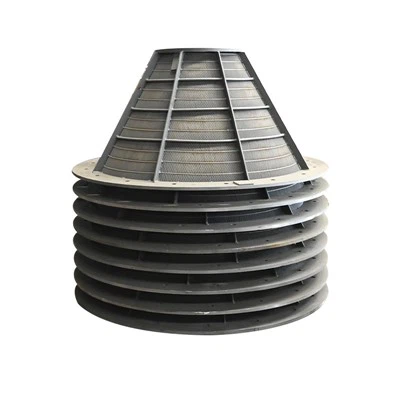
What is Sintered Wire Mesh Anyway?
Before we jump into the thickness thing, let me quickly give you the lowdown on sintered wire mesh. It’s a super – cool material made by layering multiple layers of wire mesh and then sintering them together under high heat and pressure. This process creates a super – strong, uniform structure that’s great for all sorts of filtering jobs. It’s used in everything from chemical processing to food and beverage production, and even in the aerospace industry.
Why Thickness Matters
The thickness of a sintered wire mesh filter is a big deal. It affects a whole bunch of important stuff like the filter’s strength, its flow rate, and how well it can trap particles.
First off, strength. A thicker filter is generally stronger and can handle more pressure without getting damaged. This is crucial in applications where the fluid or gas passing through the filter is under high pressure. For example, in some industrial hydraulic systems, the pressure can be through the roof, and a thin filter just wouldn’t cut it.
Then there’s the flow rate. You might think a thicker filter would slow things down, and sometimes you’d be right. But it’s more complicated than that. A well – designed thicker filter can actually maintain a good flow rate while still doing an excellent job of filtering. It all depends on how the wire mesh layers are arranged and the pore size.
And of course, particle retention. The thickness can influence how well the filter captures different sizes of particles. A thicker filter might be better at catching smaller particles, but it also has to be balanced with the flow rate. You don’t want a filter that’s so good at catching particles that it chokes off the flow completely.
Factors Affecting the Optimal Thickness
There are a bunch of factors that come into play when trying to figure out the best thickness for a sintered wire mesh filter.
Application Requirements
The first and most important factor is what the filter is gonna be used for. If it’s for a simple water filtration system in a small home, you can get away with a thinner filter. The pressure is low, and the particles you’re trying to remove are usually not super – tiny. But if it’s for a high – tech pharmaceutical manufacturing process, where you need to remove the tiniest of contaminants, you’ll probably need a thicker filter.
Particle Size
The size of the particles you’re trying to filter out is a huge deal. If you’re filtering out large particles, like sand in a water treatment plant, a thinner filter might be enough. But if you’re dealing with microscopic particles, like bacteria in a medical device, a thicker filter with smaller pores is likely required.
Flow Rate
How much fluid or gas needs to pass through the filter per unit of time is another key factor. In applications where a high flow rate is essential, like in a large – scale oil refinery, you need to find a balance. You can’t have a filter that’s so thick it restricts the flow, but it also needs to be thick enough to do its filtering job.
Pressure
The pressure of the fluid or gas passing through the filter is also important. High – pressure applications, such as in a natural gas pipeline, require a thicker and stronger filter. A thin filter would likely get damaged or blown out under the high pressure.
Finding the Optimal Thickness: A Case – by – Case Basis
So, how do we actually figure out the optimal thickness? Well, it’s a bit of a science and a bit of an art.
First, we need to understand all the details of the application. That means talking to the customer to find out what kind of particles they’re filtering, what the flow rate requirements are, and what the pressure conditions are.
Once we have all that info, we can start looking at different sintered wire mesh designs. We might test out different thicknesses in a lab to see how they perform. We can measure the flow rate, the particle retention efficiency, and the strength of the filter under different pressure conditions.
For example, let’s say we’re working with a customer who has a chemical processing plant. They need to filter out some small particles from a liquid that’s flowing through their system at a pretty high rate under moderate pressure. After some tests, we might find that a certain thickness of sintered wire mesh filter gives the best combination of good flow rate and high particle retention.
Industry Standards and Guidelines
There are also some industry standards and guidelines that can give us a starting point. Different industries have their own requirements for filter performance, and these can help us narrow down the possible thicknesses.
In the automotive industry, for instance, there are standards for the filtration of engine oil. These standards specify things like the minimum particle size that needs to be removed and the maximum pressure drop across the filter. By following these standards, we can get a better idea of what thickness of sintered wire mesh filter would work best.
Customization is Key
One of the great things about sintered wire mesh filters is that they can be customized. We don’t have to stick to some off – the – shelf thickness. We can work with the customer to create a filter that’s exactly right for their specific needs.
Whether it’s adjusting the thickness, the pore size, or the wire mesh material, we can tailor the filter to get the best performance. This is especially important in industries where the requirements are very specific, like the semiconductor manufacturing industry.
The Role of Material and Structure
The material and structure of the sintered wire mesh also play a role in determining the optimal thickness. Different wire mesh materials, like stainless steel or nickel, have different properties. Stainless steel is strong and corrosion – resistant, while nickel might be better for high – temperature applications.
The structure of the wire mesh, such as the number of layers and the way they’re arranged, can also affect the optimal thickness. A multi – layer structure with different pore sizes can be designed to capture particles more efficiently, which might allow for a thinner overall filter in some cases.
Conclusion and Call to Action
So, as you can see, there’s no easy answer to the question of what the optimal thickness for a sintered wire mesh filter is. It depends on a whole bunch of factors, including the application, particle size, flow rate, and pressure.
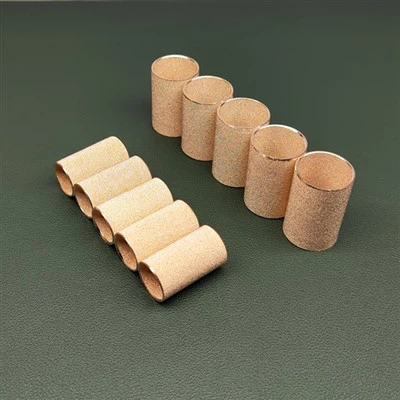
But here’s the good news: We’re experts in this stuff. As a supplier of sintered wire mesh materials and filters, we’ve got the knowledge and experience to help you find the perfect thickness for your specific needs.
Sintered Fibre Felt Material and Filter If you’re in the market for a sintered wire mesh filter, or if you just have questions about what thickness would work best for you, don’t hesitate to reach out. We’re here to have a chat, understand your requirements, and come up with the best solution for you. Whether it’s for a small – scale project or a large industrial application, we’re ready to help.
References
- ASM Handbook Committee, ASM Handbook Volume 20: Materials Selection and Design, ASM International, 1997.
- Robert M. Byrne, Industrial Filtration Handbook, Butterworth – Heinemann, 2006.
- Perrys Chemical Engineers’ Handbook, McGraw – Hill Education, 8th Edition, 2008.
Henan Easy Filter Equipment Co., Ltd.
As one of the leading sintered wire mesh material and filter manufacturers and suppliers in China, we offer a wide range of products with superior quality. Please rest assured to buy advanced sintered wire mesh material and filter from our factory. We also accept customized orders.
Address: Apartment No.1, Building No.2, Zhengshang Jinyushijia, Xinzhong Street, Xinxiang, Henan, China.
E-mail: vivian@easyfiltertech.com
WebSite: https://www.easyfilter-china.com/
