If you’ve ever worked in a semiconductor fabrication lab, a pharmaceutical cleanroom, or a biotech manufacturing suite, chances are you’ve reached for cleanroom paper at some point. As a supplier of cleanroom supplies, I field this question more often than any other: Is cleanroom paper suitable for dry use, wet use, or both? It’s not a yes-or-no answer—and that’s exactly why so many engineers, facility managers, and lab techs get it wrong. I’ve been in this role for 12 years, seen every mishap from cross-contaminated wafers to ruined sterile drug batches, and today I’m breaking it down with the kind of practical, science-backed context no generic product spec sheet will give you. Cleanroom Paper
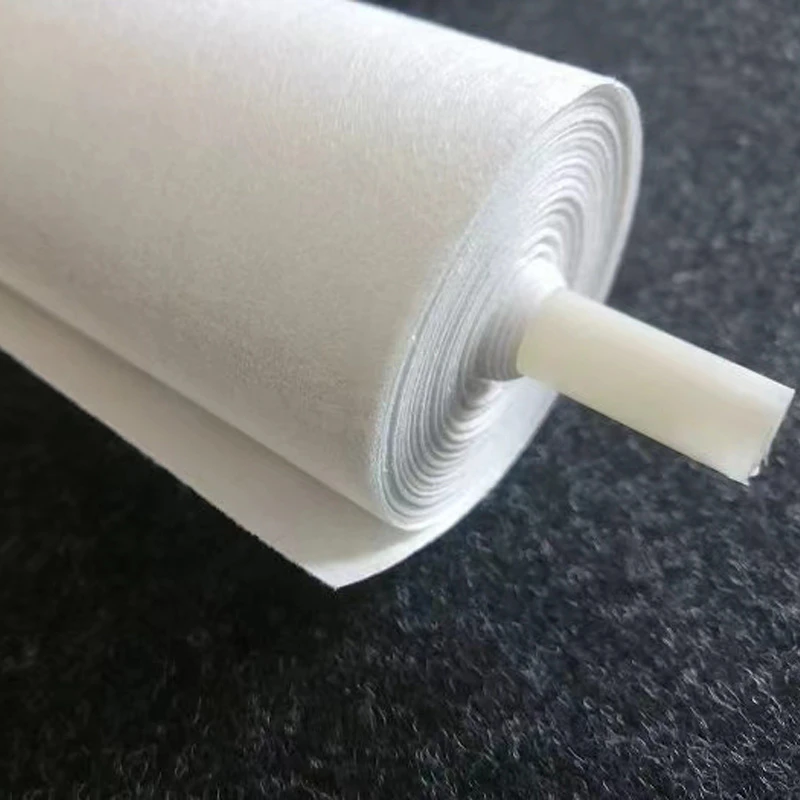
Let’s start with the basics: Cleanroom paper isn’t the same as the paper towels you grab from a break room dispenser. Regular paper is made from wood pulp, which releases loose cellulose fibers, lint, and microscopic debris when you rub it—stuff that can drift through a class 10 cleanroom and contaminate critical processes. Cleanroom paper, by contrast, undergoes a series of specialized treatments during manufacturing to minimize particle generation, control outgassing, and meet ISO 14644-1 cleanroom standards. But even within that category, there are distinct formulations designed for specific use cases—and that’s where the dry vs. wet divide comes in.
First, let’s talk about dry use. This is the most common application most people associate with cleanroom paper: wiping down work surfaces, dusting lab equipment, or cleaning small parts that don’t require liquid. The best cleanroom paper for dry use is usually low-lint, non-abrasive, and made with a dense, tight structure that traps loose particles instead of shedding them. I once worked with a semiconductor client who switched from generic lab wipes to our dry-use cleanroom paper and saw a 38% drop in wafer defects related to particle contamination in their etch process. The key here is that dry-use paper is engineered to be inert when dry—no chemical additives that can leave residues, no fibers that break off under light friction. It’s gentle enough to use on sensitive silicon wafers or sterile packaging, and it’s tested to meet 100-class (or better) particle counts when used dry. That said, there’s a hard limit to dry use: If you apply too much pressure, or if you try to use it to pick up wet spills, it will fall apart. The pulp used in dry cleanroom paper isn’t treated to retain strength when saturated, so it leaves behind even more debris when wet and can tear mid-wipe, creating a new contamination hazard.
Now, wet use. This is where a lot of suppliers cut corners. A lot of people assume “cleanroom paper” is just wet-strength paper, but that’s not the case. For wet applications—like cleaning a biosafety cabinet, wiping down a chemical fume hood, or decontaminating lab tools that come into contact with sterile materials—you need paper that can hold up when saturated with solvents, alcohols, or disinfectants, without shedding fibers or breaking down. The cleanroom paper we design for wet use goes through a special wet-strength treatment: we bond the cellulose fibers with a durable, non-toxic polymer that doesn’t outgas in cleanroom conditions. This means when you dampen it with isopropyl alcohol, for example, it doesn’t turn into a mushy, linty mess that leaves behind fiber bits on a sterile filter. But here’s a common myth: Wet-use cleanroom paper isn’t just “dry paper that got sprayed with extra water.” If you use a dry-only cleanroom paper for a wet application, two things happen. First, the dry paper’s loose fibers will absorb the liquid quickly, but they’ll also release even more lint when you rub a surface, because the wet pulp weakens its structural integrity. Second, if you use a solvent like ethanol or bleach on dry-only paper, you can leach residual chemical additives (like bleach used in pulp processing) onto your surface, which ruins sensitive experiments or products. We had a biotech client come to us two years ago after they used a regular cleanroom wipe (not our wet-formulation) to clean a cell culture hood. The wipe left behind a tiny amount of bleach residue, which killed 20 liters of valuable CHO cell lines—costing them over $40,000 and weeks of research. That’s the kind of mistake that comes from mixing up dry and wet use cases.
But wait—there’s a middle ground, too. Some of the cleanroom paper we supply is dual-purpose, designed for both dry and light wet use. These are ideal for general cleanroom tasks, like wiping down door handles, picking up small dry debris, or dampening with a small amount of DI water for light cleaning. Dual-purpose paper uses a balanced fiber structure and mild wet-strength treatment, so it doesn’t fall apart when slightly damp, but it will still shed fibers if you saturate it with strong solvents. The key here is to check the product’s ISO classification and intended use, not just the label “cleanroom paper.” For example, a dual-use wipe will usually be rated for ISO class 5, while a wet-only wipe is often rated for ISO class 3, because it undergoes more rigorous particle testing when wet.
Another factor that’s often overlooked is outgassing. Cleanrooms are controlled environments where volatile organic compounds (VOCs) can cause big problems—especially in semiconductor manufacturing, where VOCs can condense on wafers and ruin microchips. When cleanroom paper is wet, the combination of the paper’s fibers and the liquid it’s saturated with can release VOCs. That’s why our wet-use paper is formulated to have ultra-low outgassing, tested per SEMI M3 standards, while our dry-use paper has even lower outgassing because it never comes into contact with solvent. If you use a dry paper for wet use, the liquid can react with residual pulp chemicals in the dry paper to release unplanned VOCs, which is a hidden contamination risk.
I’ve seen too many teams default to a single type of cleanroom paper for all tasks, and that’s a false economy. Using dry-only paper for wet cleaning leads to higher defect rates, wasted materials, and even product loss. Using wet-only paper for dry tasks is unnecessary—wet paper is denser, more expensive, and releases more VOCs when dry, so it’s a waste of budget for simple dusting tasks. The sweet spot is matching the paper formulation to the task: dry-use for dusting and light dry wiping, wet-use for heavy cleaning with solvents or disinfectants, and dual-purpose for general, low-moisture tasks.
Now, I’ll be honest: There’s no universal rule here, and that’s why it’s so important to work with a supplier who can match your paper to your specific cleanroom’s ISO class, your industry, and your most common tasks. If you’re in aerospace, for example, you might need extra-low-outgassing paper for satellite component cleaning. If you’re in pharmaceuticals, you might need wet-use paper that’s compatible with FDA-approved disinfectants. Generic cleanroom paper won’t meet those specialized needs, and using the wrong type can lead to costly compliance issues.
At the end of the day, cleanroom paper’s suitability for dry or wet use comes down to its manufacturing formulation, particle generation rates, wet strength, and outgassing properties. It’s not a one-size-fits-all product, and that’s why asking the right questions—about your tasks, your cleanroom’s standards, and your industry’s requirements—is just as important as the paper itself.

If you’re unsure which cleanroom paper is right for your processes, or if you’re looking to reduce contamination risks and cut unnecessary material costs, don’t hesitate to reach out to our team to discuss your specific needs.
Cleanroom Paper References:
- ISO 14644-1:2015, Cleanrooms and associated controlled environments — Part 1: Classification of air cleanliness by particle concentration
- SEMI M3-1215, Standard Test Method for Total Volatile Organic Compound (TVOC) Outgassing from Materials Used in Semiconductor Processing Equipment
- US FDA, Guideline on Sterile Drug Products Produced by Aseptic Processing — Current Good Manufacturing Practice
- Cleanroom Technology Association (CRTA), Recommended Practice for Selection and Use of Cleanroom Consumables
- ASTM F1895-19, Standard Test Method for Determining Particle Generation from Cleanroom Wipes and Other Dry Wiping Materials
Suzhou DDES Electronics Co., Ltd.
As one of the most professional cleanroom paper manufacturers in China, we have world-leading production equipment and strong manufacturing capabilities. Please rest assured to wholesale high quality cleanroom paper at low price from our factory. We also accept customized orders.
Address: No.4, No.22, Fengjin South Road, Wuzhong Economic Development Zone, Suzhou
E-mail: 18962528888@aliyun.com
WebSite: https://www.cleanwipe-chn.com/
