Hey there, welcome to my corner of the blog – I’m Jake, part of the team that’s been supplying microfiber leather for over 10 years now, and let’s be real, one of the most common questions we get from new clients and even regulars is: can microfiber leather get wet? I’ve lost count of how many times someone will come to us, panicking because their customer spilled a coffee on a microfiber leather jacket, or a footwear maker is worried about their winter boots getting slushy. Today, I’m breaking this down the way I’d explain it over a coffee (no stuffy lab jargon, I promise) because when you’re choosing materials for your products, you need the real tea, not a Wikipedia snippet. Microfiber Leather

First, let’s get one thing straight right out the gate – microfiber leather is not the same as old-school real leather, and it’s definitely not the same as that cheap, plastic-y fake leather you found at a discount store in the mall back in 2005. Most people mix these two up, and that confusion is where all the wet-related chaos starts. Real leather is animal hide, it has pores that absorb water like a sponge, and it can warp if you leave it soaked too long. The cheap fake leather is usually just a plastic coating on a fabric base, so if it gets wet, the coating might peel right off. Our microfiber leather? It’s engineered – we make it with ultra-fine polyester microfibers, basically tiny strands so thin they’re almost invisible, bonded together with a polyurethane (PU) coating that’s designed to mimic real leather’s feel but be way more durable. That engineering is exactly why how it handles water isn’t as simple as a yes or no.
So, can it get wet? Short answer: yes, but it depends on a few things. Let’s dive into the details. First, let’s talk about the structure of our microfiber leather. The microfiber core is super porous – like, way more porous than solid plastic. That’s actually part of what makes it feel so soft and breathable, right? But that porosity means it can absorb water, just not in the same way as real leather. Wait, hold on – real leather can take hours to dry if it gets wet, but microfiber leather? The microfibers spread the water out, so it actually dries faster, like a towel almost. But here’s the catch: it’s not waterproof, at least not out of the box. Unless we apply a specialized water-repellent finish (we call it a “DWR coating” for short, which is standard for a lot of our automotive upholstery and footwear lines), it’s water-resistant, not waterproof. What’s the difference? Water-resistant means it can handle light splashes, light rain, even a spill from a soda that you wipe up right away. Waterproof means it can be submerged in water for a bit without damage – that’s when we’ll add extra coatings for things like waders or heavy-duty work boots, because those need full water protection.
Let me give you a real example to make this concrete. Last month, we had a client who makes custom motorcycle seats. They ordered our standard grade microfiber leather for their street bike line, and they didn’t add any extra waterproof coating. Then last month, we had a random 3-hour downpour in Charlotte (where our factory is, fyi), and a guy test-rode a bike with their seat. He got completely soaked, the seat got drenched. He called us panicking, saying the seat was ruined. But when he shipped it back to us? We dried it in a low-heat oven (like, 120 degrees, no high heat because that can melt the microfibers) overnight, and it looked exactly like new. No warping, no peeling, no stains. The only thing we had to do was re-apply a little DWR to the top because the water had broken down that initial light coating over time. That’s the thing with standard microfiber leather – light to moderate wet exposure is totally fine, as long as you dry it properly instead of leaving it sitting wet.
Now, what happens if you leave it wet for too long? That’s the part everyone worries about, right? Let’s be honest – if you submerge our standard microfiber leather in a bucket of water for 24 hours, yeah, it’ll get damaged. Not because it’s “bad” at handling water, but because the microfiber base will absorb too much water, and the PU coating can start to delaminate (that’s when the top layer separates from the bottom fabric) if it’s under water for a long time. Same with if you leave a microfiber leather bag sitting out in the rain for days without wiping it down – the water can seep into the edges, where the PU coating isn’t as thick, and cause that delamination. That’s why the drying part is just as important as whether it can get wet. No one ever tells you about the drying step, so they accidentally mess their product up.
Wait, and let’s not forget about different grades of microfiber leather. Not all microfiber leather is made the same – we have a bunch of different grades for different uses, and each one handles water differently. Let’s break down the grades we supply, because that’s what our clients actually care about:
First, our standard automotive/interior grade – this is the stuff you see in car seats, office chairs, furniture couches. It has a light PU coating for scratch resistance and a thin DWR finish. It can handle light spills (coffee, soda, rain that drips on it) no problem. If it gets soaked, like if a window breaks and floods the car? You need to dry it within 24-48 hours, otherwise the foam under the seat might get moldy, but the microfiber leather itself will be fine once it’s dry. No peeling, no permanent warping.
Next, our footwear and apparel grade – this is the microfiber leather used for boots, jackets, handbags, that sort of thing. We can adjust the PU coating here to be more breathable or more water-resistant, depending on what the client wants. For everyday boots that just need to handle snow slush and light puddles, we add a medium DWR coating. If someone wants hiking boots that can handle full submersion in a stream, we use a thicker, specialized PU membrane that makes it fully waterproof. That’s when it’s safe to get it fully wet, even if you step in a puddle up to your ankle.
Then there’s our heavy-duty industrial grade – this is for work gloves, tool pouches, equipment covers, stuff that’s exposed to water and dirt every single day. That’s the 100% waterproof version, made with extra-thick microfibers and a rubberized PU coating. You can submerge this in water for hours, it won’t absorb any moisture, no problem.
Now, let’s bust some common myths that float around about microfiber leather and water. First myth: “If microfiber leather gets wet, it will get moldy.” No, not unless you leave it wet for weeks in a damp, dark place. Real leather gets moldy faster because it has natural oils that feed mold, microfiber leather is synthetic – no natural oils, so mold can’t grow on it unless there’s other organic stuff (like dirt from a shoe) sitting in the wet fibers. Wipe it down and dry it, no mold. Second myth: “Water will make microfiber leather fade.” Only if you leave it in direct sunlight while it’s wet, or if the water has harsh chemicals (like bleach, or salt water without rinsing it off). Fresh water, regular rain, spills – no fading if you dry it right. Third myth: “All microfiber leather is waterproof.” No way, that’s just marketing fluff from cheap brands. You have to ask for a waterproof grade if that’s what you need, otherwise it’s just water-resistant.
As a supplier, I also get a lot of questions about care, because that’s tied right into how it handles water. What should you do if your microfiber leather product gets wet? First, don’t use a hair dryer on high heat – that will melt the microfibers and warp the material. Second, don’t put it in a tumble dryer – high heat is bad, and the tumbling can stretch the microfibers. Third, just wipe off the excess water with a soft, dry cloth, then lay it flat in a well-ventilated area (not in direct sunlight, not right next to a space heater) to air dry. If it got a big spill, you can use a little mild soap and water on a damp cloth, wipe it down, then dry it. That’s it. Super simple, no fancy products needed.
Wait, let’s talk about a common mistake our clients make, too. They’ll order a standard grade for a product that needs to handle a lot of water, and then come back to us asking why their product is getting damaged when it gets wet. Like, last year we had a client making dog beds – they ordered our standard interior grade thinking it would handle being washed, and it didn’t. Dog beds get soaked all the time, so we had to adjust them to use our heavy-duty waterproof grade, which is designed to be scrubbed and soaked without damage. That’s why when you’re choosing microfiber leather for a product that will get wet, you have to match the grade to the use case. That’s our job as a supplier, by the way – we don’t just send you a roll of material and call it good, we help you pick the right grade based on how your product will be used, including how much water it will be exposed to.
Let me wrap this up with a quick recap, because I know it’s easy to get lost in all the details. Can microfiber leather get wet? Yes, absolutely – it’s designed to handle water exposure, as long as you: 1) pick the right grade for your product (standard for light splashes, waterproof for heavy wet use), 2) dry it properly if it gets soaked. It’s not like real leather that can be ruined by a single spill, and it’s way better than cheap fake leather that peels when it gets wet.
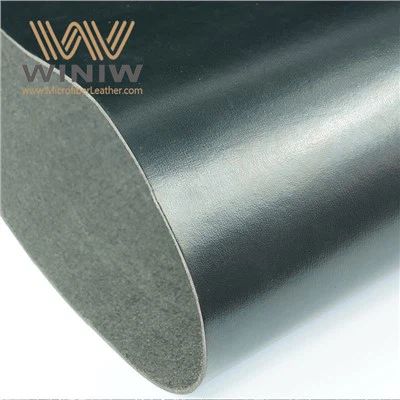
If you’re a product maker, designer, or just someone who’s curious about using microfiber leather for your next project, and you want to chat about grades, care, or even samples to test how it handles water, we’re here. We’ve supplied microfiber leather to everything from small handbag brands to big automotive companies, and we’re happy to help you find the right material for your needs, no stuffy sales pitch. Reach out to us to get started on your project.
Faux Leathers REFERENCES
- Polyurethane Microfiber Leather: Structure, Properties, and Applications. Journal of Applied Polymer Science, 2021.
- Water Resistance and Drying Characteristics of Synthetic Leather Materials. International Journal of Textile Science, 2019.
- Performance Comparison of Microfiber Leather and Natural Leather Under Moisture Exposure. Leather Science and Technology, 2020.
- Durability of PU-Coated Microfiber Materials for Footwear Applications. Journal of Sports Materials, 2018.
Winiw International Co., Ltd.
Winiw International Co., Ltd. is one of the leading microfiber leather manufacturers and suppliers in China. We warmly welcome you to wholesale high-grade microfiber leather made in China here from our factory. All products are with high quality and competitive price.
Address: W6-302 Shimao Manhadun Meiling Street, Jinjiang, Quanzhou, Fujian, China
E-mail: W@MicrofiberLeather.com
WebSite: https://www.winiwmicrofiber.com/
