If you’ve ever wandered through a neighborhood park, down a busy downtown street, or along a coastal bike path, you’ve probably seen them: fat tire electric bikes, or fat tire e-bikes, rolling past with their wide, rugged tires gripping the pavement or dirt. As a supplier of these bikes, I get asked this question at least a dozen times a week: Are fat tire electric bikes street legal? It’s not a simple yes or no answer—legality depends on where you live, how your bike is configured, and how you use it. Over the past five years, I’ve worked with riders, local law enforcement, and transportation departments across 12 U.S. states, and I’ve seen firsthand how regulations shift from one town to the next. Let’s break this down, so you can ride with confidence and avoid the headaches of riding an un Street legal bike. Fat Tire Electric Bike
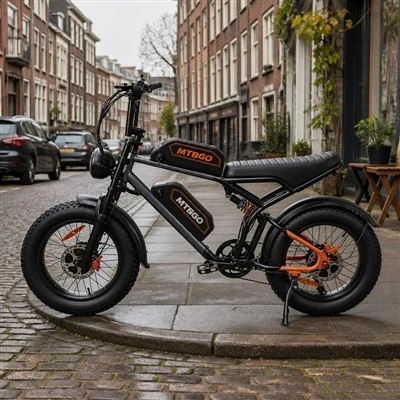
First, let’s get clear on what a fat tire electric bike is, because that’s where a lot of the confusion starts. Unlike standard e-bikes with narrow 23 to 28 inch tires, fat tire e-bikes have tires that are 3.5 inches wide or more. That wider surface area gives them better traction on loose gravel, sand, snow, and even muddy trails, which is why they’re popular for off-roading and casual cruising. But when it comes to street legality, they’re still categorized as e-bikes in most places—they just have different use cases. E-bike regulations, in turn, are almost always based on three factors: maximum motor power, top speed when powered by the motor, and whether you’re required to pedal to engage the motor. Most regions split e-bikes into classes, and that’s the framework we use to figure out if a fat tire e-bike can legally ride on public streets.
Let’s start with the U.S. regulations, since that’s where most of my customers are. The Consumer Product Safety Commission (CPSC) sets a federal definition for low-speed electric bicycles, which applies across all 50 states, but individual states and local municipalities can add their own rules. The federal definition says a low-speed e-bike has a motor with no more than 750 watts, a top speed of 20 mph when using only the motor, and pedals that you have turn to engage the motor. That means most standard fat tire e-bikes I supply fit this federal baseline. Where it gets tricky is what local governments allow for street use.
Take, for example, my home state of Colorado. Colorado classifies e-bikes into three classes, and fat tire e-bikes are treated the same as standard e-bikes here. Class 1 e-bikes (pedal-assist only, top 20 mph) can ride on all public streets where a standard bike is allowed, plus most bike paths and multi-use trails—even some that are marked “for bicycles only” (which they all are, really). That’s great for my customers in Boulder, Denver, and Fort Collins, who use their fat tire e-bikes to commute to work or run errands. But just two hours down the road in New Mexico, the rules are slightly different. New Mexico also follows the CPSC definition, but some rural counties have restricted fat tire e-bikes on county-maintained gravel roads, because they’re often confused with motorized off-road vehicles. Waiters at a Santa Fe shop told me a few years back that a tourist got a $150 ticket for riding his fat tire e-bike on a gravel road outside town, because the county didn’t have a clear definition of e-bikes vs. motorbikes. That’s why I always tell new customers to check their local county clerk’s website before hitting the road.
Outside the U.S., the rules get even more varied. In the European Union, e-bikes are classified as “pedelecs” if they meet the 250 watt motor limit, top speed 15.5 mph (25 km/h) when powered, and they only assist when you pedal. Fat tire e-bikes that fit that standard are legal on all EU streets, just like regular bikes. But in the United Kingdom, there’s a key difference: fat tire e-bikes are only legal for road use if their motor can only assist up to 15.5 mph. If a fat tire e-bike hits 20 mph on motor power, it’s classified as a moped, which requires insurance, a license plate, and a driver’s license—something most casual riders don’t want to deal with. Last year, a customer in London brought his fat tire e-bike to me because he got a ticket for riding it on a main road; he’d assumed the wide tires just made it an e-bike, not realizing the speed limit for road use was lower.
So why does tire width matter at all for street legality? It mostly doesn’t, in most places—except when local laws lump all off-road style vehicles (like ATVs, dirt bikes, and fat tire e-bikes) into the same category. Many small towns near national parks, where off-road recreation is common, worry that fat tire e-bikes will be used as stealth motorbikes to ride on trails that are closed to motorized vehicles. That’s a valid concern, so those towns often have two rules: first, you can only ride a fat tire e-bike on streets if it fits the e-bike class definition, and second, you can’t ride it on unpaved trails that are for non-motorized use only. I’ve had customers in Moab, Utah, tell me they can ride their fat tire e-bikes on the main street through town, but not on the Slickrock Trail, which is reserved for mountain bikes and foot traffic. That’s a fair trade-off, and it’s something I make sure to explain to every customer when they order.
Another big thing to watch out for: throttle-only fat tire e-bikes. Some riders don’t want to pedal, so they buy e-bikes with a throttle that lets them move without pedaling. That’s a game-changer for legality. In most U.S. states, throttle-only e-bikes are not considered low-speed e-bikes—they’re classified as motor-driven vehicles, which require a license, registration, and sometimes even a helmet for passengers. For example, in California, a throttle-only fat tire e-bike with a 750 watt motor and 20 mph top speed is still considered a Class 3 e-bike if it has a throttle, but wait—no, let me correct that: California’s Class 3 e-bikes are pedal-assist only, up to 28 mph. Throttle-only e-bikes in California are classified as moped-style vehicles, so they can only ride on streets with a speed limit under 35 mph, and riders need a driver’s license. That’s why I never recommend throttle-only fat tire e-bikes for street use, unless a customer is specifically using it off-road, where rules are looser. I’ve seen too many people get tickets for riding a throttle-only e-bike on a residential street, and it’s avoidable.
Helmet requirements are another related topic, even if they’re not directly legality. Many people assume street legal e-bikes don’t need helmets, but that’s not true. In Oregon, for example, all riders under 16 must wear a helmet on any e-bike, regardless of class, and adult riders are strongly encouraged. In Germany, all e-bike riders under 18 need a helmet, and even adult commuters often wear one because of local safety laws. As a supplier, I always include a free helmet with every street legal fat tire e-bike order, because it’s not just about compliance—it’s about keeping riders safe. I’d rather a customer follow the rules and stay safe than risk a ticket or an accident.
Let’s talk about common myths, too. I hear all the time: “Fat tire e-bikes are illegal everywhere because they’re too big.” No, that’s not true. A customer in Miami, Florida, has a fat tire e-bike that he uses to commute 5 miles to his office, and it’s completely legal—Miami-Dade County allows Class 1, 2, and 3 e-bikes on all public streets, no tire width restrictions. The myth comes from places that have outdated rules, mostly from before fat tire e-bikes became popular. Back in 2015, when I first started selling these bikes, only 7 states had specific e-bike regulations; now, all 50 do, and most have clear rules for fat tire models as long as they fit the class standards.
Another myth: If your e-bike has lights and mirrors, it’s automatically street legal. Not exactly. Lights and mirrors are required for riding after dark in most states, but they don’t change the classification. A throttle-only e-bike will still be classified as a moped, even with a headlight. The key factors are still motor power, speed, and whether you have pedals and a way to engage the motor with pedaling. That’s what law enforcement looks for when they check your bike, so don’t assume extras are a substitute for meeting the class requirements.
So what should you do if you’re a rider wondering if your fat tire e-bike is street legal? Let’s make a step-by-step guide, based on what I’ve learned over the years. First, check your local transportation department’s website—most have a section on e-bike regulations, and many even have a chart for different bike types. If you can’t find it, call your local police department’s non-emergency line—they’ll be able to tell you the rules for your area. Second, confirm your bike’s specs: is the motor under 750 watts? Does the motor only assist when you pedal, or does it have a throttle that works without pedaling? What’s the top speed when using only the motor? If all of those fit the Class 1 or 2 criteria, your bike is almost certainly street legal in most places. Third, remember that “street legal” only applies to public roads and streets—most places don’t allow e-bikes on freeways, and many restrict them on busy downtown roads with high speed limits. I always tell customers to stick to roads with a speed limit under 35 mph, even if their bike can go faster, because that’s where e-bikes are allowed.
As a supplier, I take legality seriously because I don’t want my customers to get in trouble. That’s why every fat tire e-bike I sell is configured to meet the CPSC federal definition of a low-speed e-bike: 750 watts maximum, pedal-assist only (no throttle that works without pedaling), and a top motor speed of 20 mph. I also include a clear decal on every bike that says “Class 2 Electric Bicycle,” so if you get pulled over, you can show law enforcement right away that it’s a street legal e-bike, not a motorbike or ATV. I’ve had customers tell me that this decal has helped them avoid tickets in towns where rules are less clear—it’s a small thing, but it makes a big difference.
Of course, there are exceptions. For people who want to use their fat tire e-bikes off-road, the rules are different. National forests in the U.S. allow fat tire e-bikes on most dirt roads and trails, as long as they’re not marked “closed to motorized vehicles.” That’s why many of my customers use their bikes for weekend trips to state parks, where the wide tires handle sand and snow better than standard e-bikes. The only time you need to worry about off-road legality is if you’re riding on private land without permission, or on trails that are reserved for non-motorized use only, like backcountry hiking trails.
I’ve seen the demand for fat tire e-bikes grow a lot in the last few years, and part of that is because they’re versatile: you can commute to work, run errands on sidewalks, and go off-roading on weekends. But that versatility comes with different rules, so it’s important to do your homework before you ride. I’ve had customers come to me after getting a ticket because they bought a fat tire e-bike without checking the local rules, and it’s always a lesson I try to pass on to new people.
If you’re thinking about buying a fat tire electric bike and want to make sure it’s street legal for your area, or if you have questions about configuring a bike to meet local regulations, I’m here to help. I work with riders across the country and can walk you through the specific rules for your state or county, explain the difference between class types, and make sure you get a bike that fits your needs. Whether you’re a daily commuter, a weekend adventurer, or someone who just wants a reliable way to get around town, I can help you find the right fat tire e-bike that’s street legal where you live. Feel free to reach out to discuss your needs and learn more about our range of street approved fat tire electric bikes.
Electric Dirt Bike References
National Conference of State Legislatures. (2023). Electric Bicycle Regulations in the United States.
Consumer Product Safety Commission. (2022). Safety Standard for Low-Speed Electric Bicycles.
European Cyclists’ Federation. (2023). E-Bike Classification and Regulations Across the EU.
Colorado Department of Transportation. (2023). E-Bike Use and Rules in Colorado.
Hebei Xiaotianhang Bicycle Co., Ltd.
Hebei Xiaotianhang Bicycle Co., Ltd. is one of the most professional fat tire electric bike manufacturers and suppliers in China, also supports customized service and OEM service. Please feel free to wholesale bulk CE approved fat tire electric bike in stock here and get pricelist from our factory. Quality products and reasonable price are available.
Address: Xingye North Street, North of Economic Development Zone, Guangzong County, Xingtai City, Hebei Province
E-mail: nickie@hbxiaotianhang.com
WebSite: https://www.xiaotianhang.com/
