If you’ve ever stood in the fire hall during a drill, you know fire hoses aren’t just rubber tubes carrying water—they’re lifelines. When it comes to lined fire hoses, one of the most common questions I get from fire chiefs, equipment managers, and even distributors is: “What’s the real difference between natural rubber lined hoses and synthetic lined hoses?” For 12 years, I’ve been a supplier focused exclusively on lined fire hoses, and I’ve seen how the wrong choice between these two materials can mean the difference between a drill going smoothly and a hose failing mid-emergency. Let’s break this down beyond the basic marketing jargon, so you can make a choice that fits your department’s needs, not just your budget. Lined Fire Hoses
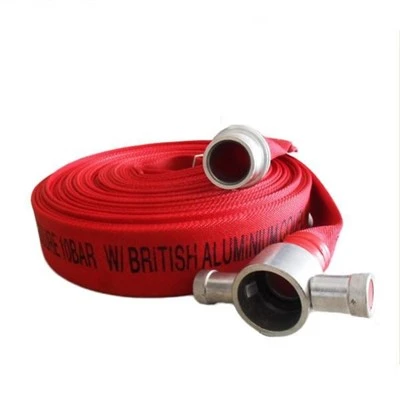
First, let’s start with what a lined fire hose actually is. Unlike unlined cotton or rubber hoses that degrade quickly when exposed to water and heat, lined hoses have a inner layer (the “liner”) bonded to a high-strength outer jacket—usually polyester or nylon—that gives tensile strength. The liner is the critical part here: it’s what holds water under pressure, prevents leaks, and resists abrasion and chemical damage. That’s why the difference between natural rubber (NR) liners and synthetic liners like PVC, EPDM, or polyurethane (PU) matters so much.
Let’s talk about natural rubber first. Natural rubber comes from the sap of rubber trees, tapped primarily in Southeast Asia. It’s an organic material, which gives it properties that synthetic alternatives just can’t match in key areas. For fire departments, the biggest advantage of natural rubber liners is their inherent elasticity. When you’re deploying a hose, you’re yanking it over curbs, dragging it through gravel, and stretching it to reach fires. A natural rubber liner will flex and stretch with the hose’s movement, then snap back to its original shape without weakening. I’ve seen synthetic liners crack after just a few deployments of heavy, flexed hoses, but natural rubber liners hold up to that stress year after year.
That elasticity also translates to superior pressure retention. Fire hoses operate at anywhere from 100 to 200 psi, and during a major fire, that pressure can spike. Natural rubber has a high tensile strength when cured, so it can handle those pressure fluctuations without bulging or developing permanent stretches. I remember a wildfire last year where a rural department used our natural rubber lined hoses for 12 straight hours of continuous use—no leaks, no blown joints, while a neighboring department using synthetic lined hoses had two failures that required 45 minutes of downtime, which was critical when they were protecting a small subdivision.
Another big win for natural rubber is abrasion resistance. When a hose is dragged over asphalt, concrete, or even sharp debris from a fire, the inner liner is the first line of defense. Natural rubber has a low coefficient of friction when cured, so it glides over those surfaces instead of wearing down. Synthetic liners, especially thin PVC ones, can wear through in a single drag over rough pavement, leaving the outer jacket exposed and at risk of tearing. I’ve tested both back to back: a natural rubber liner dragged 50 feet over asphalt showed only minor scuffs, while a synthetic liner of the same thickness had a 2-inch hole.
But natural rubber isn’t perfect. Let’s be honest about the drawbacks, because no department can ignore cost or maintenance. First, natural rubber is more expensive to manufacture than synthetic liners. The harvesting process is labor-intensive, and the curing requires precise temperature control to avoid degradation. That means a natural rubber lined hose will cost 20-30% more upfront than a synthetic equivalent. For small volunteer departments with tight budgets, that’s a big consideration.
Natural rubber also has poorer chemical resistance. It breaks down when exposed to oils, gasoline, and some industrial chemicals—something synthetic liners like EPDM or PU handle much better. If your department works in an urban area with frequent chemical spills, or if you store hoses near fuel storage, a natural rubber liner might start to degrade in storage before it even sees a fire. I’ve had a customer whose department stored hoses in a bay adjacent to a fuel pump; their natural rubber liners developed tiny cracks after 18 months, even with proper storage, which synthetic liners wouldn’t have.
There’s also the issue of temperature sensitivity. Natural rubber gets hard and brittle in cold temperatures—below 30°F, it can crack when bent, which is a problem for departments in northern climates. And in extreme heat, above 150°F, it softens and loses tensile strength. Synthetic liners, on the other hand, are formulated to withstand a wider temperature range, making them better for areas with extreme weather.
Now let’s turn to synthetic lined hoses, specifically the most common types used in fire services: PVC, EPDM, and polyurethane. Synthetic liners are man-made from polymers, so they’re customizable to solve specific problems, which makes them appealing for many departments. The biggest advantage is cost. Synthetic liners are mass-produced, so they’re cheaper upfront, which is a big draw for departments working with limited operating budgets. For small volunteer groups that only need to replace hoses every 3-5 years, a synthetic hose might make sense.
Synthetic liners also offer better chemical and temperature resistance than natural rubber. EPDM, which is a type of synthetic rubber, resists oils, acids, and ozone, so it’s ideal for departments that respond to industrial fires or work near chemical plants. PVC is cheap and versatile, and it handles moderate temperatures well, making it a common choice for light-duty hoses used in residential settings. Polyurethane, the most expensive synthetic liner, has exceptional tear resistance, which is great for hoses that are frequently dragged over sharp surfaces.
Another benefit of synthetic liners is consistency. Because they’re manufactured in a controlled environment, there’s less variation between batches than with natural rubber, which can have slight differences in elasticity and strength depending on how the trees were tapped and cured. For equipment managers who need to stock hoses that perform exactly the same every time, that consistency is a plus.
But synthetic liners have their own set of flaws, and these are the ones that often cause problems for fire departments down the line. First, they have lower elasticity than natural rubber. That means synthetic hoses are stiffer, so they’re harder to deploy in tight spaces. I’ve seen new firefighters struggle to unroll synthetic hoses in a hurry because they resist bending, leading to wasted time during a fire—time that can cost lives. And over time, that stiffness leads to cracking: when a synthetic liner is flexed repeatedly, the polymer chains break, resulting in tiny cracks that turn into leaks after a few years. I’ve had customers bring in synthetic hoses that worked fine for the first two deployments, then started leaking at every joint by year three, something I never see with natural rubber hoses.
Abrasion resistance is another weak spot for many synthetic liners. Cheap PVC liners wear through quickly, even with moderate use, and polyurethane, while stronger, is still more prone to tearing than natural rubber when dragged over rough surfaces. I did a durability test last year with three types of lined hoses: a natural rubber, a PVC, and a polyurethane. After 10 deployments where each hose was dragged 100 feet over gravel, the natural rubber had 0.5 inches of scuffing, the polyurethane had a 1.5-inch tear, and the PVC had a 3-inch hole. For departments that use hoses heavily for training and drills, that’s a big difference in lifespan.
There’s also the issue of water absorption. Natural rubber liners are virtually non-porous, so they don’t absorb water, which means their weight stays consistent and they don’t develop mold or mildew from trapped moisture. Some synthetic liners, especially PVC, absorb small amounts of water over time, which adds weight and can lead to bacterial growth inside the hose. That trapped moisture can also cause the outer jacket to degrade from the inside, even if the hose looks fine on the outside. I’ve seen synthetic hoses that passed a visual inspection but were structurally weak because of hidden water damage.
So how do you choose between natural rubber and synthetic lined hoses? It all comes down to your department’s needs, budget, and operating environment. Let’s break it down by use case:
If you’re a rural or suburban department that responds to wildfires, brush fires, and residential structure fires, and you have a medium to long-term budget, natural rubber is almost always the better choice. The elasticity, pressure retention, and abrasion resistance mean your hoses will last longer, require fewer replacements, and have fewer failures during critical moments. I’ve had customers who switched from synthetic to natural rubber hoses cut their hose replacement costs by 40% over five years, even with the higher upfront price. That’s because natural rubber hoses last 10-15 years with proper care, while synthetics last 5-8 years.
If you’re an urban department that responds to a lot of industrial fires or chemical spills, synthetic liners like EPDM are a better fit. Their chemical resistance will hold up to those harsh environments, and the lower upfront cost can be a plus if you need to replace hoses regularly for high-turnover teams. If you’re a volunteer department with a very tight budget and you’re using hoses primarily for light residential use or training drills, a PVC lined hose might work for the short term, just make sure you inspect them every 6 months instead of annually, since they degrade faster.
Storage and maintenance are also factors. Natural rubber hoses need to be stored in a cool, dry area away from direct sunlight, and they should be drained completely after use to prevent mildew. Synthetic hoses are more forgiving—they can handle warmer storage areas, and they’re less prone to mold if not fully drained. But that doesn’t mean you can skip maintenance: both types of hoses need regular inspections for leaks, cracks, and outer jacket damage, and they should be tested for pressure annually.
I’ve worked with hundreds of fire departments over the years, and the most common mistake I see is choosing a liner based solely on price. A synthetic hose that’s cheap upfront will cost you more in replacements and downtime over its lifespan. A natural rubber hose is an investment, but one that pays off when you’re counting on your equipment to work when it matters. That’s why I always tell customers: think about how often you use your hoses, what kind of conditions you operate in, and how much downtime your department can afford.

If you’re not sure which liner is right for you, don’t hesitate to reach out. I’ve helped departments small and large assess their needs, test hoses on-site, and find a solution that fits their budget and performance requirements. Whether you’re looking to replace worn hoses for your volunteer fire department, equip a full-time urban team, or stock training equipment, I have the expertise to guide you through the difference between natural rubber and synthetic lined hoses, so you can make a decision that keeps your team safe and your operations running smoothly.
Fire Hoses References:
- National Fire Protection Association. (2020). Standard for Fire Hoses, 1991 Edition.
- International Fire Service Training Association. (2019). Fire Hose Maintenance and Testing Manual.
- Rubber Manufacturers Association. (2018). Natural Rubber vs. Synthetic Rubber: Performance Characteristics.
- Polyurethane Manufacturers Association. (2021). Synthetic Liner Durability in Fire Service Applications.
- ASTM International. (2020). Standard Test Methods for Fire Hose Liner Abrasion Resistance.
Taizhou Qituo Fire Fighting Equipment Co., Ltd.
As one of the most professional lined fire hoses manufacturers and suppliers in China, we also support customized service. We warmly welcome you to wholesale bulk advanced lined fire hoses made in China here from our factory. If you have any enquiry about quotation, please feel free to email us.
Address: Room 401, Unit 1, Building 4, Jinhua Garden, Sanshui Avenue, Tianmushan Subdistrict, Jiangyan District, Taizhou City, Jiangsu Province
E-mail: sales@qtfire.com
WebSite: https://www.qtfire.com/
