If you’ve ever needed to measure dissolved oxygen (DO) in water—whether you’re running a commercial fish farm, maintaining a municipal wastewater treatment plant, testing aquarium water for rare species, or conducting research in a limnology lab—you know how much rides on your meter’s accuracy. A wrong reading can lead to dead stock in a aquaculture pond, failed regulatory compliance for a treatment facility, or skewed data that invalidates months of fieldwork. As a DO meter supplier who’s worked directly with dozens of operators over the last 12 years, I’ve seen firsthand how choosing the wrong brand can turn a simple daily task into a costly, stressful headache. DO Meter
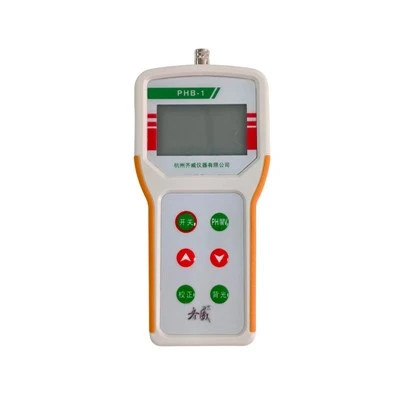
Today, I’m breaking down the brands that actually deliver reliable, consistent results, and why some cut-price options fall short. I’m not here to push a random line of meters—my team and I stand behind every recommendation here because we’ve tested them in real, messy, high-stakes environments, not just a lab under perfect conditions.
Let’s start with what makes a good DO meter, because that’s the baseline no brand can skip. A quality DO meter relies on two core components: the sensor (the part that touches the water and reads oxygen levels) and the signal processing (the part that turns that reading into a number you can trust). For sensors, optical sensors (the newer type that use a luminescent film instead of the old-fashioned polarographic membranes) are the gold standard now. They’re less prone to fouling (gunk buildup on the tip from algae, bacteria, or sediment) and don’t need frequent membrane electrolyte refills like polarographic ones. A good meter also lets you calibrate easily—ideally one-point or two-point calibration, with automatic temperature and pressure compensation, because oxygen solubility drops the warmer the water is and the higher the altitude you’re measuring at. Any meter that skips these basic features isn’t worth your time.
First up, my top pick for general-purpose use: YSI. This is a brand that’s been around since 1948, so they’ve earned their reputation. I’ve supplied YSI meters to small-scale freshwater aquaculture operations and large municipal water systems, and the consistency is unmatched. Their ProD series sensors—like the ProD-Optical—are made with a rugged, molded tip that stands up to scrapes from pond liners or debris, and the luminescent coating lasts up to a year, so you’re not replacing sensors every few months on a tight budget. What I love most about YSI is their customer support: if a client calls at 7 a.m. with a meter that won’t calibrate for a harvest, their tech team answers quickly, not after hours. The only small caveat here? YSI’s meters are a bit pricier than budget brands, but over three years, they cost less than replacing a cheap meter and throwing it away twice in that same window.
Next, for lab and research settings, Hach is hard to beat. Hach has long been the go-to for analytical testing, and their DO meters are designed for precision when you need to publish results or meet strict regulatory standards. Their HQ series meters offer a 0.01 mg/L resolution—meaning you can spot tiny fluctuations that would be invisible on a general-purpose meter. We’ve supplied Hach meters to university limnology labs, where researchers need to track diurnal DO changes in a small lake, and the results are repeatable test after test. One feature that’s a game-changer for labs is their data logging: you can set the meter to take readings every minute and store thousands of data points, no manual note-taking required. The trade-off here is that Hach’s meters are more complex to set up than basic models, so they’re better for users who have some technical training, not someone who only needs a quick pond check each day.
If you’re working in extreme environments—like saltwater aquariums, coastal marinas, or industrial wastewater—do yourself a favor and look at Oakton. Oakton, a subsidiary of Cole-Parmer, specializes in rugged, field-ready meters, and their DO 6+ model is a workhorse. I’ve sent Oakton meters out to saltwater fish farms where the water is dense with salt and algae, and the optical sensor doesn’t foul nearly as fast as other brands I’ve tested. One farm I work with tested a leading brand’s polarographic meter and had to replace the membrane every two weeks; their Oakton meter still runs on the same sensor after six months. The DO 6+ is also affordably priced, so it’s perfect for small operations that don’t want to blow their budget on a high-end lab meter. It does have a simpler interface, though, so if you’re used to advanced data logging, you might miss some of the extras from YSI or Hach.
Now, let’s talk about the brands that I’d recommend avoiding, based on years of experience. I’ve had too many clients come to me after buying a “bargain” DO meter from a big-box store or a random online marketplace, and the problems are consistent. First, most budget brands use low-quality optical coatings that degrade in just a few months, leading to readings that are off by 1 to 2 mg/L—enough to make a fish farm stock suffocate because they thought DO levels were safe. Some also skip automatic pressure compensation, so if you’re working at a mountain pond, your readings will be artificially high because the meter doesn’t account for lower atmospheric pressure. I’ve even seen a small aquarium business lose $10,000 worth of rare coral because their cheap meter read 5 mg/L when the actual level was 3 mg/L—deadly for coral that needs consistent high DO. If a meter is less than half the price of YSI or Oakton, it’s usually cutting corners on sensor quality, and that cost will come back to bite you.
Wait, there’s one more brand that’s worth a special mention: Thermo Scientific. Their Orion Star series is a solid middle-ground pick for users who need more than a basic meter but don’t want to pay for lab-level precision. The Orion Star A223 has a intuitive interface, works well for both fresh and saltwater, and has reliable calibration features. I’ve supplied it to small wastewater treatment plants where operators don’t have a dedicated lab tech, so they need a meter that’s easy to learn but still accurate enough to meet EPA requirements. It’s not as rugged as Oakton or as precise as Hach, but it fills a great niche for mid-sized operations.
A common question I get from new clients is: should I go optical or polarographic? Let’s clear that up, because it’s a decision that affects your long-term costs. Polarographic meters were the standard for decades—they use a membrane, electrolyte solution, and a cathode that reacts with oxygen. But they need weekly maintenance: you have to refresh the electrolyte, scrub the membrane, and replace it every month or two. For a busy aquaculture manager, that’s time you don’t have. Optical meters, by contrast, have no moving parts (except maybe the sensor cap), need calibration only once a month, and don’t have to mess with electrolyte. Even though the initial cost is a bit higher, the time saved and fewer replacements make optical meters the better choice for almost everyone now. The only exception is if you’re working in a lab where you need ultra-high precision and don’t mind the maintenance for that level of accuracy.
Another tip I’ve picked up over the years: always buy your meter from a reputable supplier, not a third-party seller. Counterfeit DO meters are a problem—we’ve had clients bring in fake YSI meters that read 30% lower than actual levels, because the sensor was a cheap knockoff. A trusted supplier will stand behind their product, offer training if you need it, and replace faulty parts if something goes wrong. That’s not something you get from a random online retailer.
At the end of the day, the best DO meter for you depends on your use case:
- If you’re running a large aquaculture operation, municipal water system, or lab that needs precision: go with YSI or Hach.
- If you’re a small farm, marina, or saltwater aquarium on a budget: Oakton.
- If you’re a mid-sized treatment plant or small research team: Thermo Scientific Orion.
- If a meter is priced too good to be true, it probably is—avoid budget brands with no track record.
If you’re currently looking to upgrade your DO meter, test a new model for your operation, or have questions about which brand fits your specific needs, our team of specialists is here to help. We can walk through your use case, share real-world test results from similar operations, and work with you to find a meter that balances accuracy, durability, and cost.
Urea Meter References
- American Water Works Association. (2021). Dissolved Meters: Selection and Calibration Guidelines for Water and Wastewater Facilities. AWWA Press.
- Boyd, C. E. (2019). Water Quality for Aquaculture. 3rd ed. Elsevier.
- Limnology and Oceanography. (2020). Methods for Measuring Dissolved Oxygen in Aquatic Ecosystems. John Wiley & Sons.
- U.S. Environmental Protection Agency. (2022). Compliance Monitoring for Municipal Wastewater Treatment: Dissolved Oxygen Requirements. EPA Office of Water.
Hangzhou Qiwei Instrument Co., Ltd.
Hangzhou Qiwei Instrument Co., Ltd. is one of the most reliable manufacturers and suppliers of do meter in China, featured by quality products and good service. Please rest assured to buy bulk durable do meter in stock here from our factory. We also accept customized orders.
Address: Room 101, Building 25, No. 488-1, Donghu North Road, Linping District, Hangzhou City, Zhejiang Province, China
E-mail: info@qiweilab.com
WebSite: https://www.qiweilab.com/
