Achieving a specific surface finish on a titanium flange is a meticulous process that requires a deep understanding of titanium properties, advanced machining techniques, and quality control. As a titanium flange supplier, we are well – versed in the art and science of attaining the exact surface finishes our customers demand. This blog will guide you through the key aspects of achieving the ideal surface finish on a titanium flange. Titanium Flange

Understanding Titanium and Its Impact on Surface Finish
Titanium is a remarkable metal known for its high strength – to – weight ratio, excellent corrosion resistance, and biocompatibility. However, these properties also present unique challenges when it comes to surface finishing. Titanium has a relatively low thermal conductivity, which means that during machining, heat can accumulate at the cutting edge. This heat can cause the formation of a hard, brittle layer on the surface, known as the "white layer," which can negatively affect the surface finish and the overall integrity of the flange.
Moreover, titanium is prone to galling, a form of adhesive wear that occurs when two surfaces slide against each other under high pressure. This can result in rough, uneven surfaces if not properly managed during the finishing process. Therefore, understanding these inherent properties of titanium is the first step in achieving a specific surface finish.
Selecting the Right Machining Techniques
Turning and Milling
Turning and milling are common machining processes used to shape titanium flanges. When turning, the choice of cutting tool is crucial. Carbide tools with a sharp cutting edge are often preferred as they can withstand the high temperatures and forces generated during titanium machining. The cutting speed, feed rate, and depth of cut also need to be carefully controlled. A slow cutting speed and a light feed rate can help reduce heat generation and minimize the risk of galling.
In milling, the use of high – speed steel or carbide end mills is essential. The orientation of the milling cutter and the direction of the cut can also impact the surface finish. For example, up – milling (where the cutting force is against the direction of the workpiece feed) can sometimes result in a better surface finish than down – milling, as it reduces the likelihood of the cutter dragging chips across the surface.
Grinding
Grinding is an effective method for achieving a very fine surface finish on titanium flanges. However, it requires special attention in the case of titanium. Conventional grinding wheels can quickly become loaded with titanium chips, reducing their cutting ability and causing excessive heat generation. Therefore, vitrified or resin – bonded grinding wheels specifically designed for titanium are recommended.
The grinding parameters, such as the wheel speed, workpiece speed, and feed rate, must be optimized. A higher wheel speed can increase the cutting efficiency, but it also generates more heat. A proper coolant should be used to dissipate the heat and remove the chips from the grinding zone. Coolants with high lubricity can also reduce the friction between the grinding wheel and the titanium surface, improving the surface finish.
Surface Treatment Processes
Polishing
Polishing is a popular surface treatment method for achieving a smooth, reflective finish on titanium flanges. There are several types of polishing processes, including mechanical polishing, chemical polishing, and electrochemical polishing.
Mechanical polishing involves using abrasive materials, such as sandpaper or polishing wheels, to remove the surface roughness. The process typically starts with a coarse – grit abrasive to remove any large defects and then progresses to finer – grit abrasives for a smoother finish. The choice of abrasive material and the polishing pressure need to be carefully adjusted to avoid over – heating and damaging the titanium surface.
Chemical polishing uses chemical solutions to dissolve the surface layer of the titanium, resulting in a smooth and shiny finish. This process is relatively simple and can be used to polish complex shapes. However, the chemical solutions need to be carefully formulated to ensure that they do not cause excessive corrosion or pitting.
Electrochemical polishing is a more advanced technique that combines the principles of electrochemistry and chemical polishing. It can produce a high – quality, uniform surface finish on titanium flanges. During electrochemical polishing, the titanium flange is immersed in an electrolyte solution, and an electric current is passed through it. The anodic dissolution of the surface layer results in a smooth and bright finish.
Coating
Coating is another option for achieving a specific surface finish on titanium flanges. There are various types of coatings, such as ceramic coatings, nitride coatings, and polymer coatings.
Ceramic coatings can provide excellent wear resistance, corrosion resistance, and high – temperature stability. They are typically applied using techniques such as physical vapor deposition (PVD) or chemical vapor deposition (CVD). These processes can create a thin, hard coating on the titanium surface, improving its surface properties and durability.
Nitride coatings, such as titanium nitride (TiN) or titanium aluminum nitride (TiAlN), are commonly used to enhance the hardness and wear resistance of titanium flanges. They can be applied using PVD or plasma – assisted CVD processes. The nitride coating not only improves the surface finish but also provides a decorative and protective layer.
Polymer coatings can be used to provide a smooth, low – friction surface finish on titanium flanges. They can also offer good chemical resistance and electrical insulation. Polymer coatings can be applied by spraying, dipping, or electrostatic deposition methods.
Quality Control
Quality control is an integral part of achieving a specific surface finish on titanium flanges. There are several inspection methods that can be used to ensure the surface finish meets the required specifications.
Visual Inspection
Visual inspection is the simplest and most common method of quality control. It involves examining the surface of the titanium flange with the naked eye or using a magnifying glass. Any visible defects, such as scratches, pits, or unevenness, can be easily detected. However, visual inspection has its limitations, as it may not be able to detect very small or microscopic defects.
Surface Roughness Measurement
Surface roughness measurement is a more accurate method of assessing the surface finish. There are several instruments available for measuring surface roughness, such as profilometers and optical interferometers. Profilometers work by tracing a stylus across the surface of the flange and measuring the vertical displacement of the stylus. Optical interferometers use light interference to measure the surface topography. These instruments can provide detailed information about the surface roughness parameters, such as Ra (average roughness), Rz (maximum height of the profile), and Rq (root – mean – square roughness).
Microstructural Analysis
Microstructural analysis can be used to examine the internal structure of the titanium flange and detect any potential defects or changes in the material properties. Techniques such as metallography, electron microscopy, and X – ray diffraction can be used to analyze the microstructure of the titanium. This can help identify any issues, such as the presence of the white layer or changes in the grain structure, which may affect the surface finish.
Conclusion
Achieving a specific surface finish on a titanium flange is a multi – faceted process that involves understanding the properties of titanium, selecting the right machining techniques, applying appropriate surface treatment processes, and implementing strict quality control measures. As a titanium flange supplier, we have the expertise and experience to meet the diverse surface finish requirements of our customers.
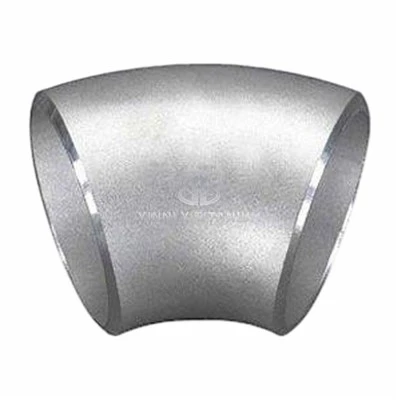
Whether you need a smooth, polished finish for aesthetic purposes or a hard, wear – resistant coating for industrial applications, we can provide high – quality titanium flanges that meet your specifications. We are committed to using the latest technologies and best practices to ensure that our products meet the highest standards of quality.
Titanium Reducer If you are interested in purchasing titanium flanges with a specific surface finish, please contact us to discuss your requirements. We look forward to working with you to provide the best solutions for your projects.
References
- Kalpakjian, S., & Schmid, S. R. (2009). Manufacturing Engineering and Technology. Pearson Prentice Hall.
- ASM Handbook Committee. (2000). ASM Handbook Volume 7: Powder Metallurgy. ASM International.
- Totten, G. E., & MacKenzie, D. E. (2004). Handbook of Machining with Coolants. CRC Press.
Baoji Yinnly Titanium Co., Ltd.
Baoji Yinnly Titanium Co., Ltd. is one of the most professional titanium flange manufacturers and suppliers in China, featured by quality products and good service. Please rest assured to buy bulk titanium flange in stock here and get quotation from our factory. Customized orders are welcome.
Address: Unit 902, Building 1, Creative Building, No. 195, Gaoxin Avenue, High-tech Zone, Baoji City, Shaanxi Province
E-mail: anna@yinnlyti.com
WebSite: https://www.yinnlyti.com/
